If You Have No Scales in the Kitchen

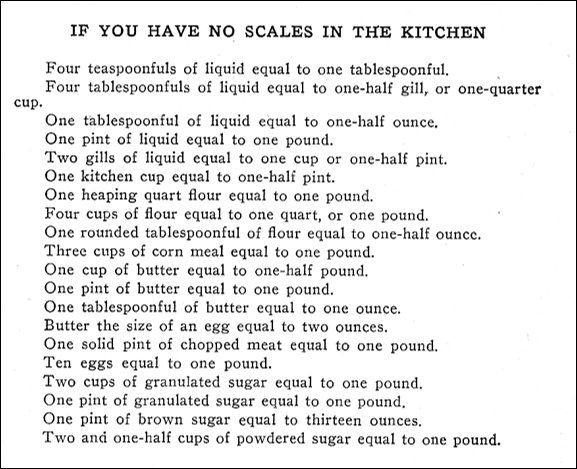
Conversions - cooking ingredients
Source: Order of the Eastern Star Relief Fund Cook Book compiled by Michigan Grand Chapter (1923)

Here’s some hundred-year-old advice about the weight equivalents of various common ingredients. It’s interesting how a given volume of some foods weighs less than other foods. For example, 2 cups of granulated sugar equals a pound, but a pint (2 cups) of brown sugar equals 13 ounces.

I found this list in a cookbook compiled by an organization. It made me smile to see how the one item on the list that spilled over to a second line was out of alignment with the other items in the list. I’d probably do something like that – though maybe that’s how it’s supposed formatted.  Not sure.

Hundred-Year-Old Timeline for Canning Fruits and Vegetables

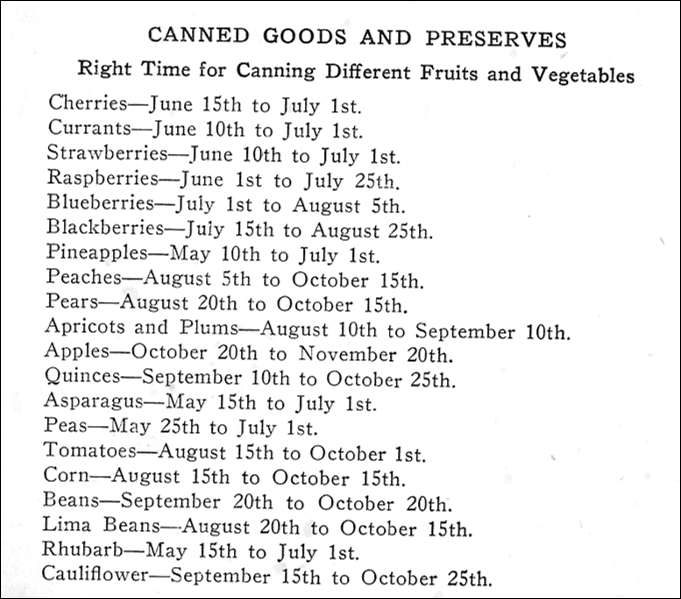
canning timeline
Source: Order of the Eastern Star Relief Fund Cook Book compiled by Michigan Grand Chapter (1923)

I don’t think that the timeline for canning fruits and vegetables has changed much across the years – though I’m guessing that this timeline is most appropriate for the northern parts of the U.S. since it is from a cookbook compiled in Michigan. The dates probably would be shifted earlier in more southern locales.


1923 Directions for Calculating Number of Calories Needed Daily

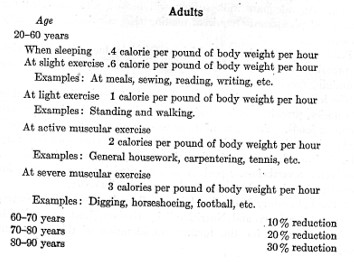
Calorie calculation chart
Source: Boston Cooking-School Cook Book (1923)

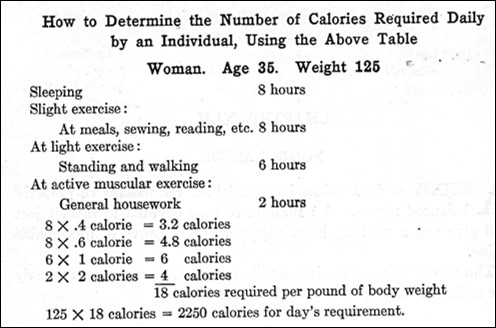
A 1923 cookbook contained directions for calculating the number of calories needed daily. It also provided an example of how to use the chart:

calorie calculation example
Source: Boston Cooking-School Cook Book (1923)

To see if the number of recommended calories has changed across the years, I used an online calorie calculator to estimate the number of calories needed by a 35 year old woman who weighs 125 pounds. The online calculator asked for height. I used 5′ 4″. I also indicated that the woman did moderate exercise 4-5 times per week. The online calculator said that she needed 1827 calories per day to maintain weight which is 423 calories less than the hundred-year-old estimate that 2250 calories were needed per day – but perhaps doing two hours per day of general housework back then required more calories than moderate exercise 4-5 times per week does today.

Hundred-Year-Old Suggestions for Making Pies from the First Fruits of Summer

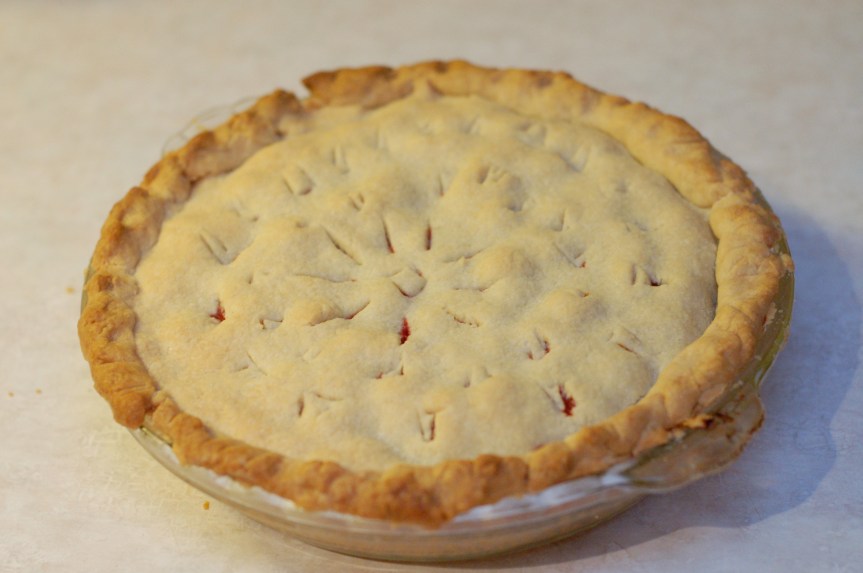
pieHere’s some hundred-year-old advice for making pies using summer fruits:
Pies from the First Fruits of Summer

As the season of abundant fruit approaches, let us not forget that the most delicious pies of the whole year are the juicy, full-flavored ones made from the summer fruits. To be at their best, they should be eaten the day they are baked.

For fruit pies, allow for a larger upper crust. After trimming it evenly, turn the margin over and under the lower crust, pressing the rounded edge firmly upon the pie-plate. This “hem” effectually seals up the juices, for the edge of the pie crisps first before the fruit begins to simmer. Make a pattern of slits over the top, through which the steam may escape.

Never put a pie in the over and forget it. It often needs turning to get an even brownest. Burned piecrust is unsightly and leaves a bad, black taste in the mouth.

In making plain fruit pies of huckleberries or blackberries, the prepared fruit should be thoroughly mixed with sugar and flour to thicken in a separate dish and then turned into the paste-lined pie plate.

American Cookery (June/July, 1923)

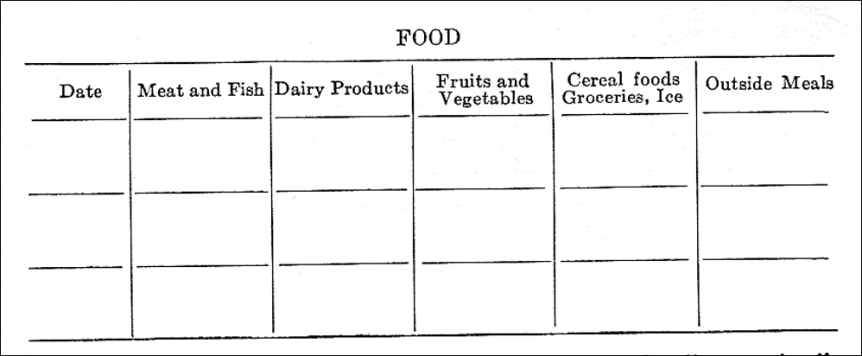
1923 Food Expense Record Sheet

Food Expense Record
Source: Economics of the Family (C.W. Taber & Ruth A. Wardall, 1923)

Food is so expensive today. I don’t do a very good job of keeping track of how much I spend on food. I just know that it’s a lot. Maybe I should use this hundred-year-old food expense record sheet from a hundred-year-old home economics textbook. Here is what it said about the record sheet:

Food Expense Record

All expenses chargeable to the food account may be entered under the general heading of “food.” This does not give as much information as is frequently desired and it is helpful and quite usual to make a few subheadings.

Care should be taken to enter only food items under “groceries.” The bill from the grocery frequently includes other items than food – such as soap, brooms, matches, mouse-traps, etc. Frequently, the man of the household and sometimes school children must secure the noon-day meal away from home. The cost of these meals is chargeable to the food account.

Economics of the Family (C.W. Taber and Ruth A. Wardall, 1923)


Hundred-year-old Tip for Softening Butter

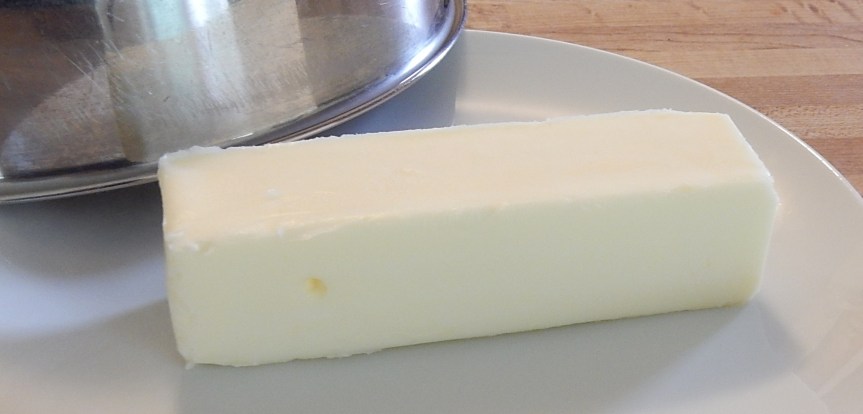
butter on plate with bowlButter is sooo hard when I first take it out of the refrigerator. It’s impossible to spread. Also, I never seem to think about setting it out ahead of time to soften when I want use it in recipes. I could be imagining it, but I think that cold butter is harder today than in the past.

In any case, I was pleased to find a hundred-year-old tip for softening butter:

When butter is too hard to spread easily, turn a heated bowl upside down over the butter dish for a few minutes. This will thoroughly soften the butter without melting it.

Cookbook (Published by the Bethany Shrine Patrol No. 1, Rochester NY, 1923)

Should Muffins Have a Flat Top?

blueberry muffinsUntil I read a reader’s request in a hundred-year-old magazine, I never thought about whether muffins should have a flat top:

Tell me why my muffins are flat on top?

Here’s the response:

Muffins Flat on Top

We could no be hired to tell you how to make muffins that are not flat on top, because the test of the perfect muffin is a flat top. It is like cake, it should be flat as the floor on top, and if it is not there is something wrong with either the making or the baking. To be sure, we often have hummocky muffins and hummocky cake served to us in places where they ought to know better – and they even taste good, yet we eat them with inward grief. We congratulate you that you have achieved that by-no-means easy or common task, the flat-topped muffin. Long may you continue to make them and no other kind.

American Cookery (June/July, 1923)

I’ve made various types of muffins a half dozen times across the years for this blog. I clicked through those posts and was appalled to discover that my muffins do not have flat tops.

Oh dear, I make hummocky muffins.  Maybe the person who responded was writing about English muffins, but somehow I think not. When you make muffins, do they have a flat top?

When I did this post I also learned a new word. “Hummocky” means a rounded mound of earth, knoll or a pile of ice, ridge.