Old-fashioned Cherry Pudding Recipe

16-year-old Helena Muffly wrote exactly 100 years ago today: 

Monday, June 26, 1911:  Felt so terrible this morning, so did Ruth. Picked cherries nearly all afternoon! There were sour ones, so there was no danger of spoiling my hands to any considerable extent.
Her middle-aged granddaughter’s comments 100 years later:

How did the Muffly family use the sour cherries? In pies? . . . jam?. . . fruit compote? . . . cherry pudding?

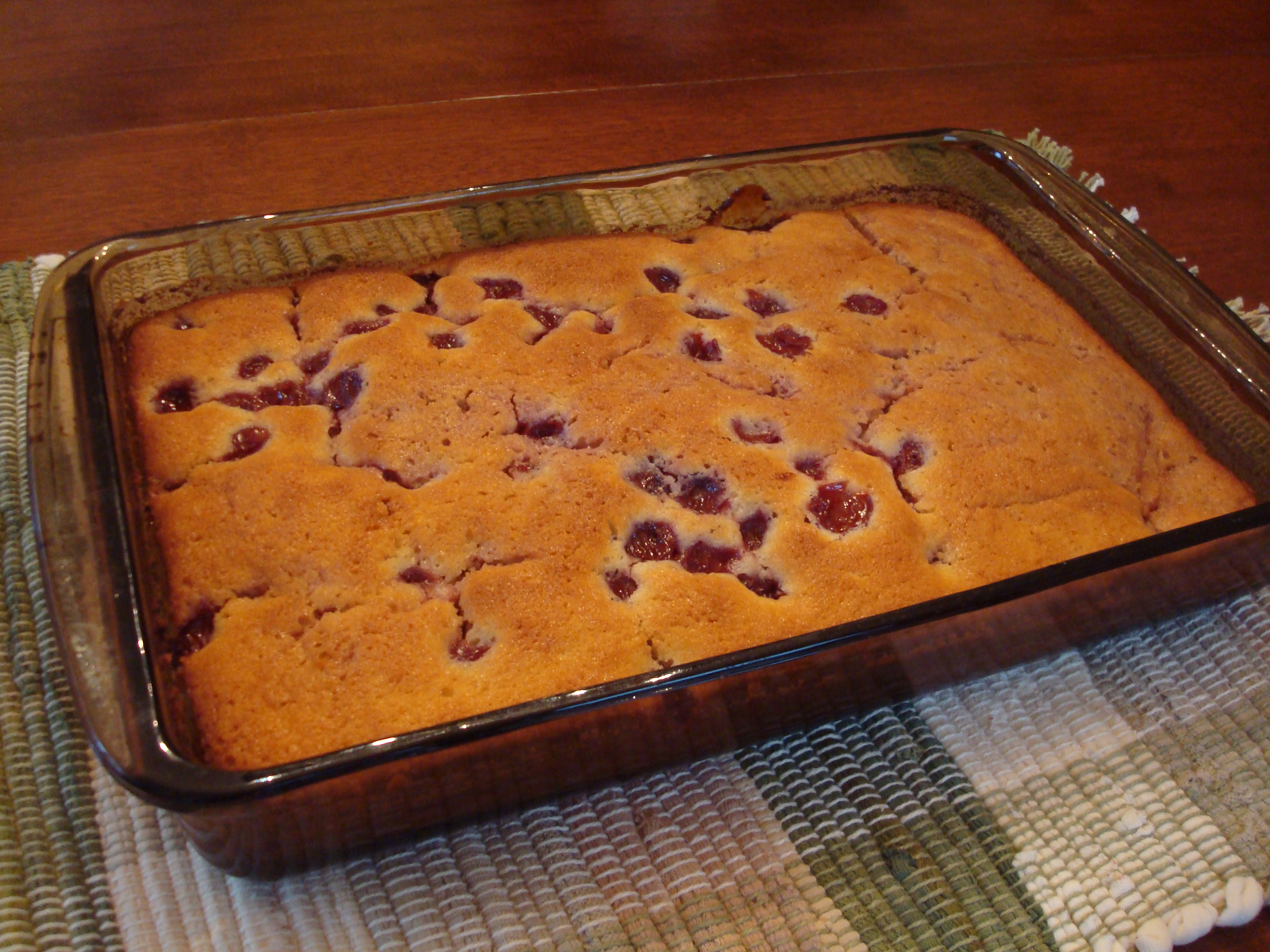
I can remember cherry pudding tasting awesome on hot summer evenings after a hard day of making hay.  Here’s the old family recipe that I use to  make Cherry Pudding.

Cherry Pudding

1/2 cup butter, melted

1 cup sugar

1 1/2 teaspoon baking powder

1/4 teaspoon salt

1 egg

1 cup milk

1 1/2 cups all-purpose flour

1 teaspoon vanilla

3/4 cup sugar

2 1/2 cups pitted sour cherries*

1/2 cup water

Preheat oven to 350 degrees. Put into a mixing bowl: butter, sugar, baking powder, salt, egg, milk, flour, and vanilla; beat until smooth. Pour into a 7 1/2  X  12  X  2 inch rectangular casserole dish, or similarly sized dish.

Make sauce by heating the 3/4 cup of sugar, cherries (including any juice), and water. Bring to a boil; then spoon the cherry sauce over the batter to distribute the cherries and the liquid across the top of the batter.  Place in oven and bake for 35 to 45 minutes, or until pudding just begins to shrink from sides of dish, and the top is golden brown. When baked, cherries and sauce will be on the bottom. Serve warm. If desired, may be served with milk.

*Frozen or canned cherries may be used. Do not drain frozen or canned cherries; and include juice when measuring cherries. It works okay to use a 1 pound can of cherries—there just will be somewhat fewer cherries in the dish than if fresh or frozen cherries were used. Reduce amount of sugar, if using cherries canned or frozen in sugar syrup.
Strawberry Season Over

16-year-old Helena Muffly wrote exactly 100 years ago today: 

Friday, June 23, 1911: Was to pick strawberries this afternoon, but decided that it would be too hot. I’m going to stop now, as the season is over, having earned a snug sum of $2.65.

Her middle-aged granddaughter’s comments 100 years later:

Grandma had begun picking strawberries on June 12. $2.65 in 1911 would be worth about $75 today.

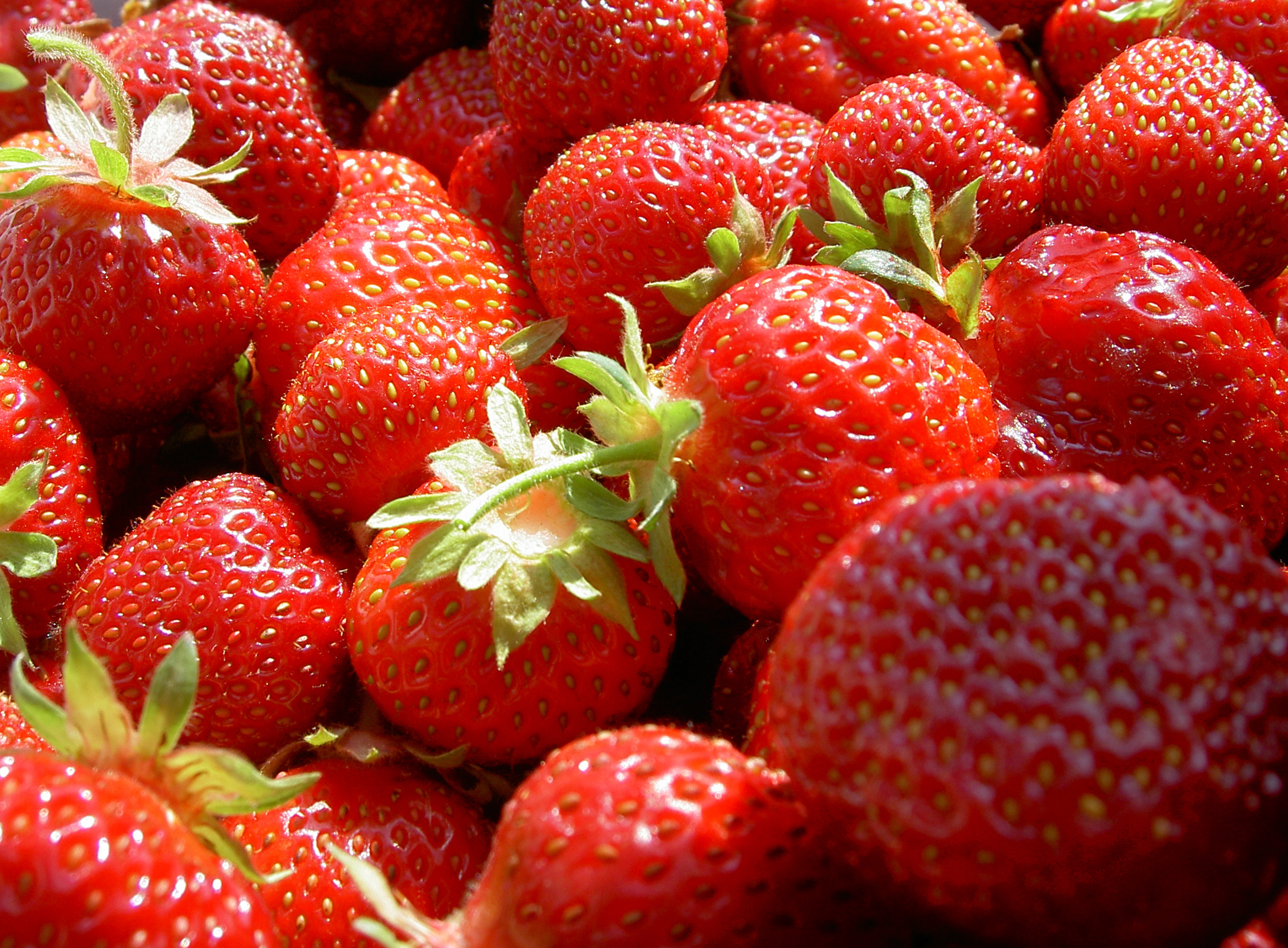
When I was young we ate strawberries day in and day out during June—and ate black raspberries day in and day out during early July, and corn on the cob later in July and August. For each fruit or vegetable there was a season, and it tasted so wonderful the first time it was served each year—and we were so tired of it that we thought we never wanted to see it again by the time the season ended. But we were always thrilled when strawberries (or raspberries or corn) was again available the following year.

(Photo source: Wikepedia Commons)

Old-Fashioned Strawberry Shortcake

16-year-old Helena Muffly wrote exactly 100 years ago today: 

Monday, June 12, 1911: Started to pick strawberries this morning. Of course it will mean some early rising and loss of sleep, but just look at what I can earn.

Her middle-aged granddaughter’s comments 100 years later:

It sounds as if Grandma got paid for picking strawberries. I wonder if she worked for a neighbor who raised the strawberries, hired workers to pick them, and then sold them in town—or if her parents raised berries for sale (and paid their own children to harvest them).

Regardless of who owned the berry patch, I bet that the Muffly family enjoyed eating strawberries.

I don’t know how Grandma’s family served strawberries, but when I was a  child we ate shortcake muffins with strawberries and milk almost daily during June. I would guess that they also ate strawberry shortcake a hundred years ago.

We ate strawberry shortcake for supper—and it was part of the main meal (not a dessert). The  menu consisted of shortcake, and meat or fried potatoes.

It seems a little strange today—but back then on those hot June days we’d typically have a heavy meal for lunch (we called it dinner) and a relatively light meal with strawberry shortcake in the evening. In June on the farm we’d being baling hay—and there was lots of hard, hot labor required to get the hay baled and then stacked in the barn—so it seems even more amazing to me now that we ate a relatively light meal (that many today would consider a dessert) in the evening.

Here’s a traditional recipe for strawberry shortcake:

Strawberry Shortcake

1 1/4 cups flour

1 1/4 teaspoons baking powder

1/4   teaspoons salt

1/4 cup butter, softened

Scant 1/2 cup milk

Sliced strawberries

Additional milk (optional)

Preheat oven to 420 degrees. Stir the flour, baking powder, and salt together. Cut the butter into the flour mixture . Add milk and stir just enough to combine using a fork. Grease muffin pan and fill each about 3/4 full. Cook about 18-20 minutes or until lightly browned. Serve with strawberries and milk (optional).

servings: 6 muffins

Food for a Barn-Raising

16-year-old Helena Muffly wrote exactly 100 years ago today: 

Tuesday, June 6, 1911: We had the raising of the barn this morning. Tweetie and her mother were here to assist. Besse also. Perhaps you may think I was in my highest ecstasy, a hovering among the dishes. M.C.R. was here. Good night.

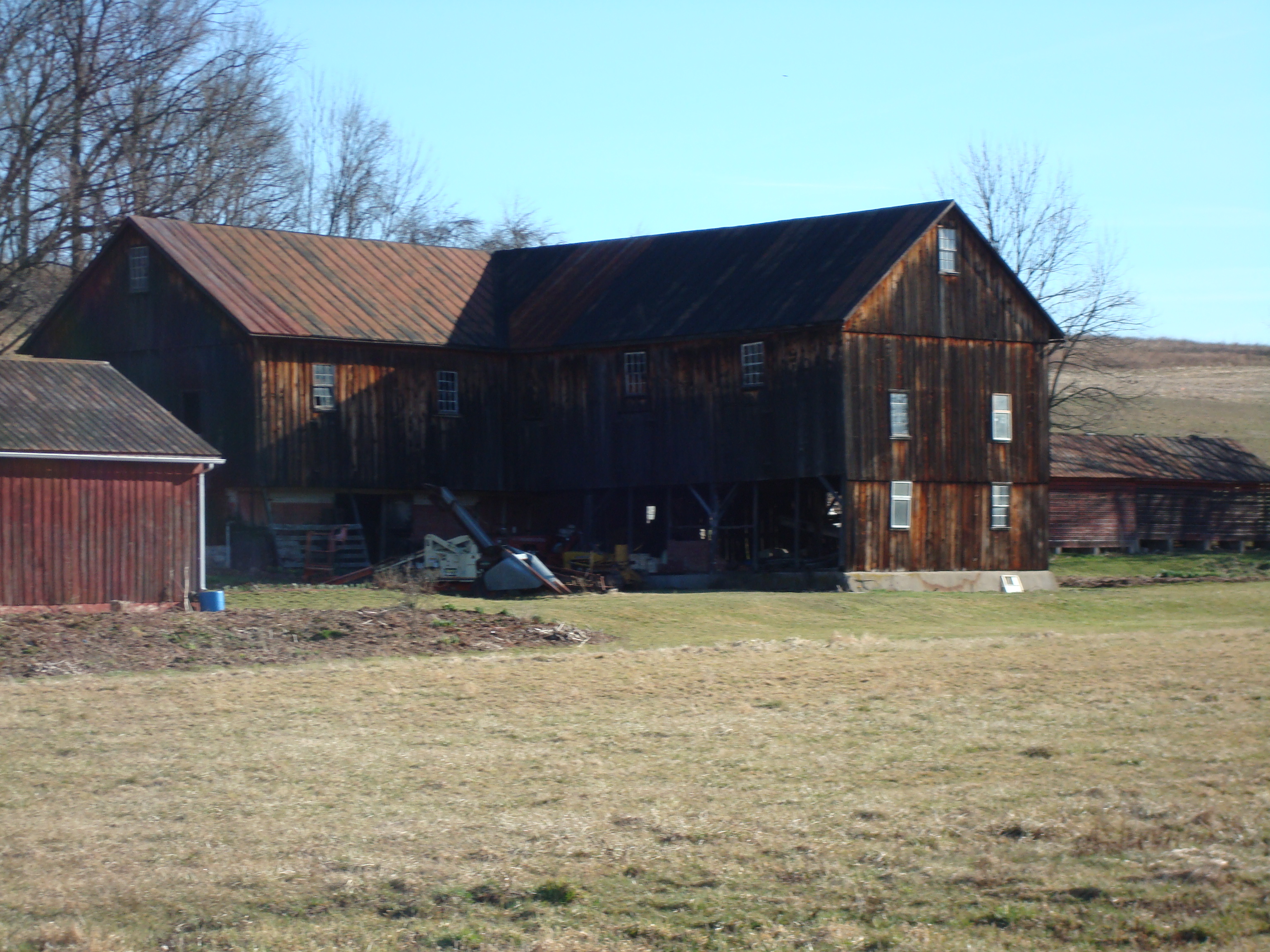
Recent photo of the barn on the farm where Grandma lived when she wrote the diary. Which part was the addition that was raised a hundred years ago today?

Her middle-aged granddaughter’s comments 100 years later:

It’s amazing how neighbors helped one another a hundred years ago. I wonder how many men helped with the raising of the barn addition, and how much food Grandma helped prepare and serve. The Mennonite Community Cookbook by Mary Emma Showalter contains a menu for a barn raising. The book was published in 1950—but the author writes that the menu was found in an old hand-written recipe book of her great-grandmother’s so it’s old:

Food for a Barn Raising

(Enough food for 175 men)

115 lemon pies

500 fat cakes (doughnuts)

15 large cakes

2 gallons applesauce

3 gallons rice pudding

3 gallons cornstarch pudding

16 chickens

3 hams

50 pounds roast beef

300 light rolls

16 loaves bread

Red beet pickle and pickled eggs

Cucumber pickle

6 pounds dried prunes, stewed

1 large crock stewed raisins

5 gallon stone jar white potatoes and the same amount of sweet potatoes

  The Mennonite Community Cookbook by Mary Emma Showalter

Rhubarb Sponge Pie Recipe

16-year-old Helena Muffly wrote exactly 100 years ago today: 

Monday, June 5, 1911: Mother, Besse and Ruthie flew around today a baking pies and cakes. I thought it be fun to swipe one, but oh, the result.

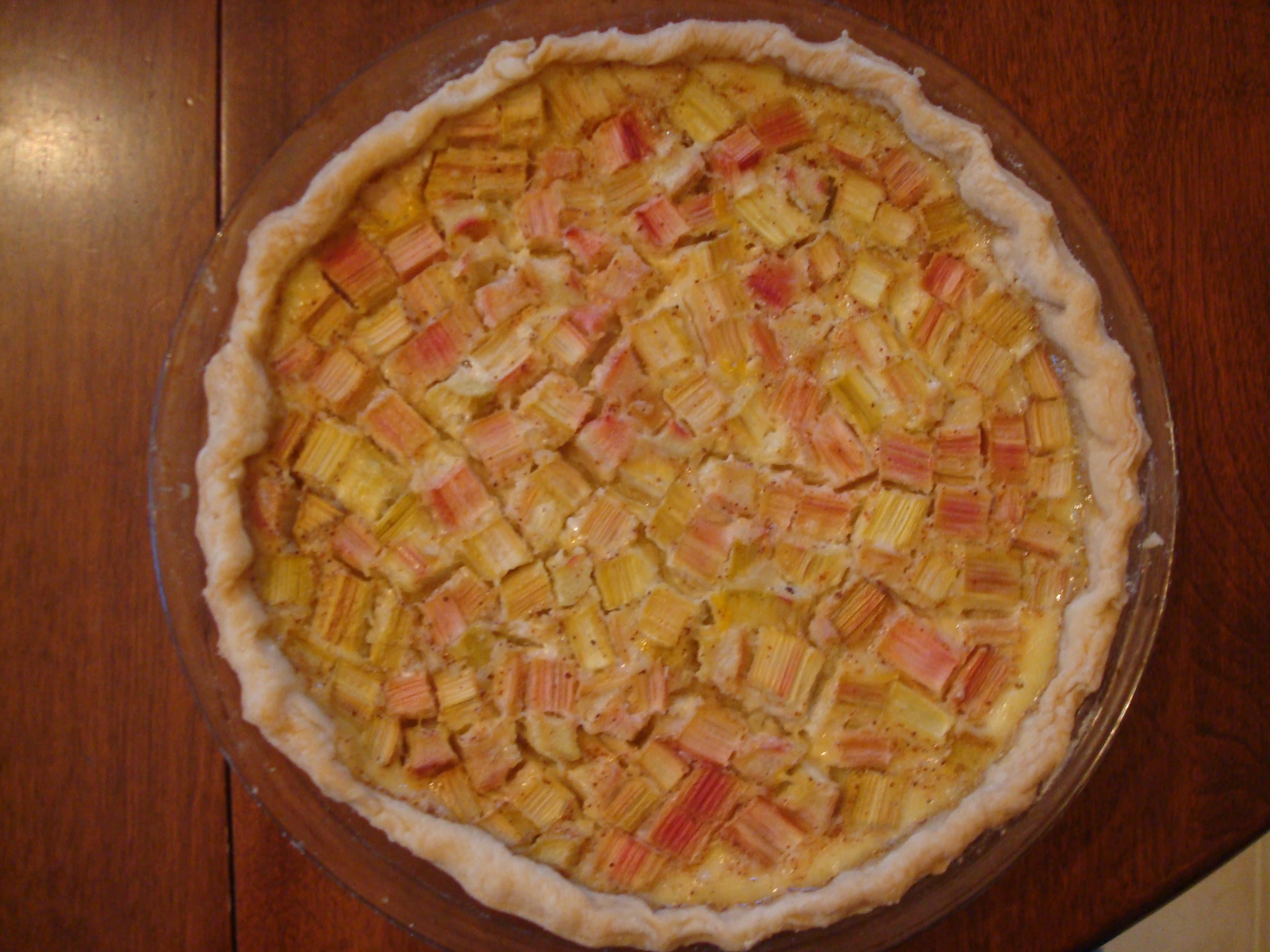
Rhubarb Sponge Pie

 Her middle-aged granddaughter’s comments 100 years later:

Grandma’s married sister Besse came to help her mother and sister bake pies and cakes. It sounds like Grandma didn’t help—I wonder why. As a 16-year-old, you’d think that she’d be a competent baker (or at least could help with some of the easier tasks). But instead Grandma apparently was clowning around—and swiped a pie—and got into trouble. Whew, what  punishment was referred to as “the result”?

What kinds of pie did they make? My favorite old-fashioned spring pie is Rhubarb Sponge Pie. (I got this recipe from my mother-in-law. However, it is an old-time Pennsylvania recipe—and the Muffly women may have made a similar pie.)

Rhubarb Sponge Pie

3 eggs

3 tablespoons all purpose flour

1/2 teaspoon nutmeg

3/4 cup sugar

dash salt

1 cup milk

2 cups rhubarb

9 inch pie shell (see recipe below)

Heat oven to 425 degrees. Beat eggs slightly. Add flour, nutmeg, sugar, and salt; Beat for 1 minute. Add milk and beat until blended. Stir in rhubarb. Bake at 425 degrees for 5 minutes. Reduce heat to 325 degrees. Bake (1 – 1  1/2 hours*) until knife inserted into center of pie comes out clean.

*This pie takes a long time to bake. If the rhubarb starts to turn brown (burn) before the center of the pie is solid, reduce heat to 300 degrees.

Any pie pastry recipe—or a pie pastry purchased at the store— can be used to make Rhubarb Sponge Pie. But for a really flakey crust with an absolutely awesome taste, make an old-fashioned pie shell using lard.

I absolutely love the recipe below. At the stores where I shop lard can be surprisingly difficult to find—and I am always searching for it so that I can make really good pies. (Clayton and Elizabeth, thank you for the lard that I used to make the pie in the photo!)

In any case, here’s the recipe:

Old-Fashioned Pie Pastry (1 crust, 9 inch)

 1 cup flour

1/3 cup lard

2 to 3 tablespoons cold water

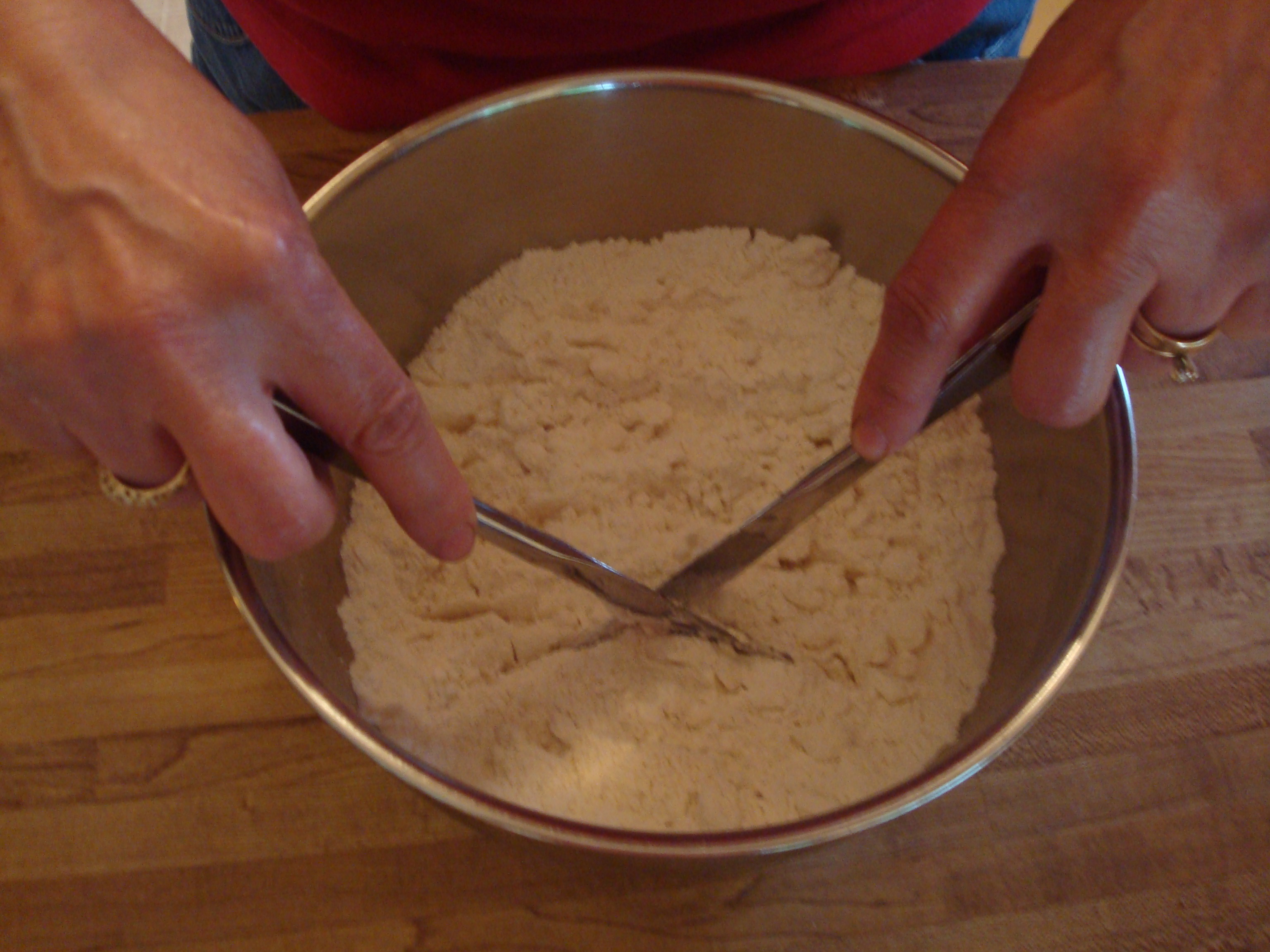
Put flour into bowl. Cut in shortening  using two knives or a pastry blender. Add water and mix using a fork until dough starts to cling together. If needed, add additional water.

With a little practice it’s easy to cut lard (or shortening) into the flour using two knives. I learned how to do it when I was young and have never felt a need to buy a pastry blender.

Gather dough together in a ball. Flatten into a round circle on lightly floured surface (a floured pastry cloth works well).  Roll dough 2 inches larger than needed to fit pie pan using floured rolling pin. Fold pastry into quarters; unfold and fit into pan.

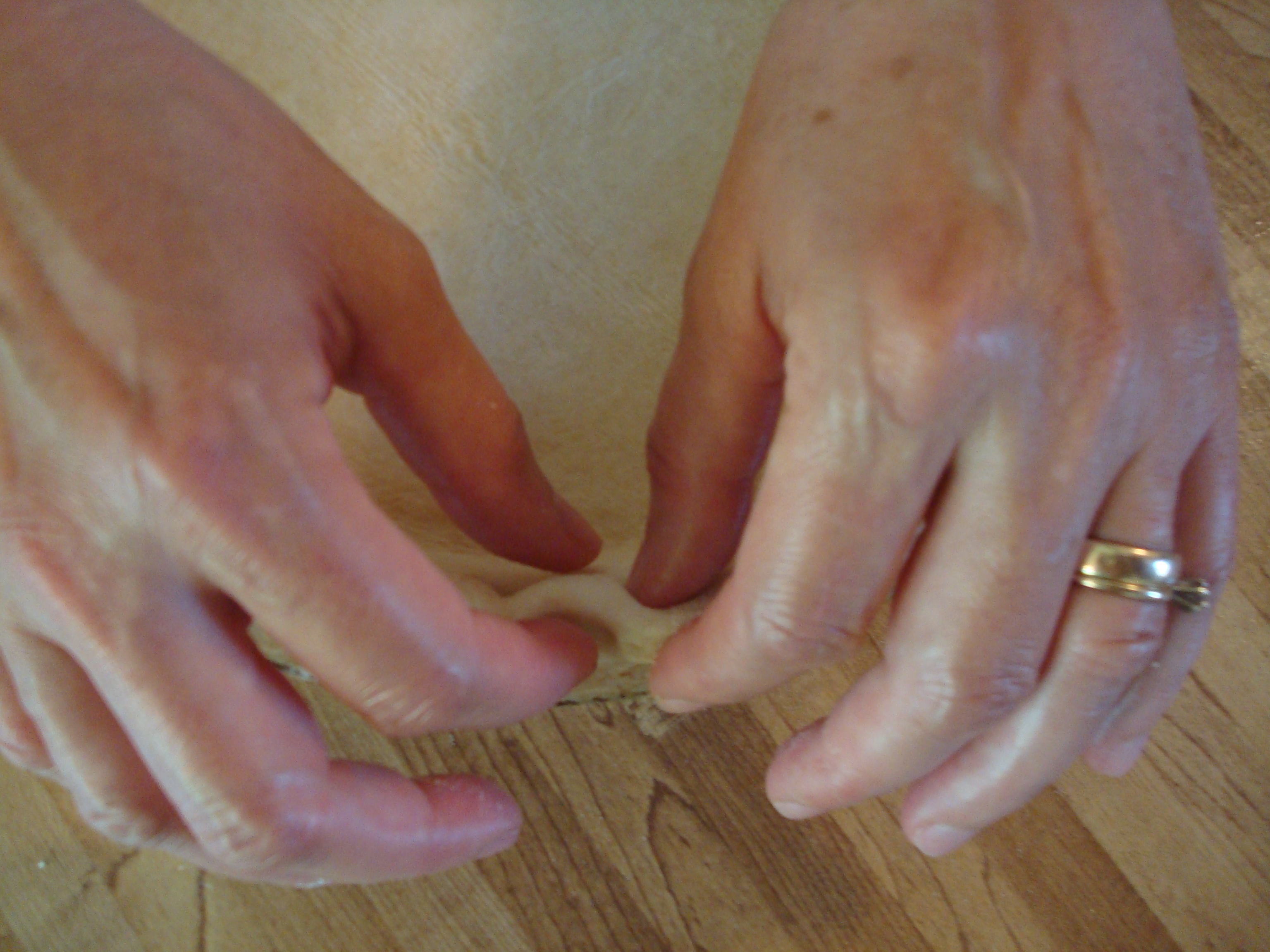
Trim  edge of pastry 1/2 inch from rim of pan. Flute pastry to create edge by pressing between fingers that are moving in opposite directions.

Fluting pie edge

Stewed Rhubarb (Rhubarb Sauce)

16-year-old Helena Muffly wrote exactly 100 years ago today: 

Wednesday, May 24, 1911: One of these days I’m going to do something of some importance. I’m getting rather tired of the same old duties, the same old ways, and the same old troubles.

Her middle-aged granddaughter’s comments 100 years later:

Whew, the same old duties, the same old ways, and the same old troubles. I wonder what Grandma was referring to. Sometimes I wish that she’d tell us more about what her daily duties were—and what she didn’t like about the “old ways”. But of course she couldn’t have known that we’d be reading her diary a hundred years later . . .

Since she didn’t tell us much about what happened, I’m going to try to guess what foods the family have might have been eating in late May.

They were probably enjoying fresh greens, radishes, and other spring vegetables from their garden. They probably were also eating rhubarb. It used to be considered one of the spring tonic foods (dandelion was another) that helped restore people’s energy and health after a long winter without fresh foods.

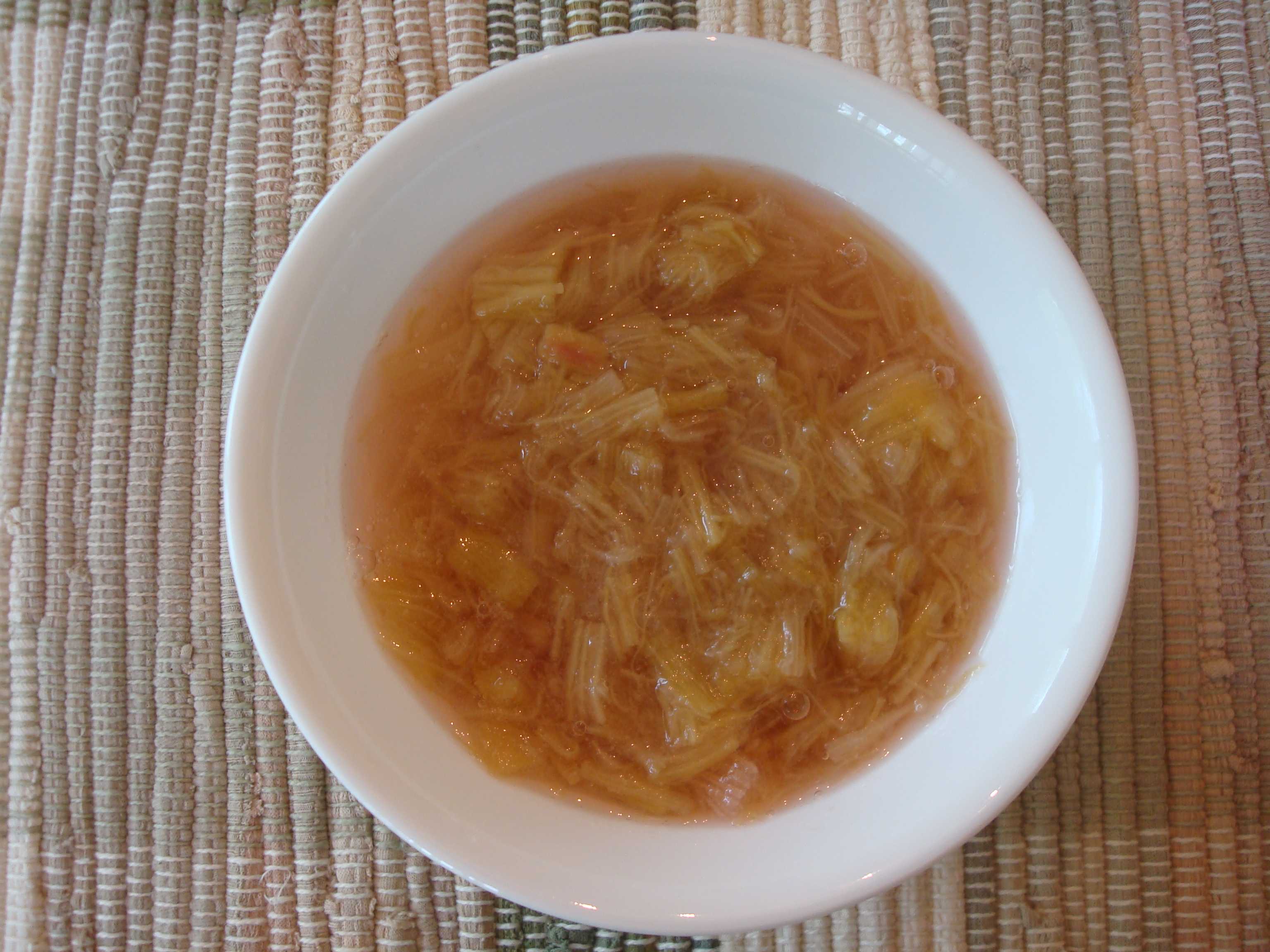
Stewed Rhubarb

When I was a child we often ate Stewed Rhubarb (Rhubarb Sauce) in May. We ate it as a side dish during the main meal. (We ate it warm at the first meal; left-overs were eaten chilled). I don’ t have a recipe for Stewed Rhubarb, and I haven’t made it in years—but yesterday I successfully made it from memory and it tasted just as I remembered.  This is what I did:

Stewed Rhubarb (Rhubarb Sauce)

2 cups rhubarb (cut into 3/4 inch pieces)

1/3 cup sugar

1/4 cup water

1/2 teaspoon salt

Mix all of the ingredients together in a saucepan. Using medium heat, heat to boiling; reduce temperature and simmer until tender (about 5 minutes); stir occasionally. Remove from heat. Can be served either hot or chilled. 2-3 servings. Recipe can be easily doubled or tripled.

The amount of sugar can be adjusted to make the rhubarb tarter or sweeter.

My husband’s family also ate Stewed Rhubarb when he was a child—and he agrees that the recipe turned out perfectly. He took seconds—and we easily ate all of the rhubarb at one meal. (Next time I’ll make more). And, he suggested that we should have it again soon. It’s definitely an old-time food that we’ve enjoyed rediscovering.

Old-fashioned Chocolate Almond Drop Cookies

16-year-old Helena Muffly wrote exactly 100 years ago today: 

Sunday, May 21, 1911: Went to Sunday school this afternoon. The whole Stout family was over this evening. Wormed the results of that letter out of Carrie.

Her middle-aged granddaughter’s comments 100 years later:

This entry describes one of the really nice characteristics of rural life—neighbors just dropping by to visit.  One hundred years ago, on warm spring evenings neighbors probably often gathered to chat about the weather, share the local news, or talk about …. well, just whatever. Long-term friendships were formed over the years—and people would discuss anything and everything.

The adults may have sat around the kitchen table —while the young folks wandered off for their own discussions.  Cookies or other refreshments may have been served. A small cookbook published in 1911 to advertise KC Baking Powder contained this recipe for chocolate almond drop cookies:

K C Almond Drop Cookies

2 eggs, beaten light

1 cup sugar

2 ounces chocolate melted

1 ½ cups blanched almonds, chopped

1 teaspoonful vanilla extract

1 cup flour

1 level teaspoonful K C Baking Powder

½ teaspoonful each, salt and cinnamon

Sift together, three times, the flour, salt, cinnamon, and baking powder. To the eggs add the sugar, chocolate, almonds, extract, and lastly the flour mixture. Drop by teaspoonfuls upon a buttered baking pan. Bake in a moderate oven. This recipe makes about three dozen little cakes.

The Cook’s Book (KC Baking Powder,1911)

When I tried this recipe, I heated the oven to 375 degrees and baked the cookies for about 12-14 minutes. I didn’t sift the flour—and I used unsweetened chocolate, sliced almonds, and a different brand of baking powder. I was surprised that the recipe didn’t call for any butter or other shortening.

The cookies are tasty with a slight hint of cinnamon, and the recipe is definitely a keeper.