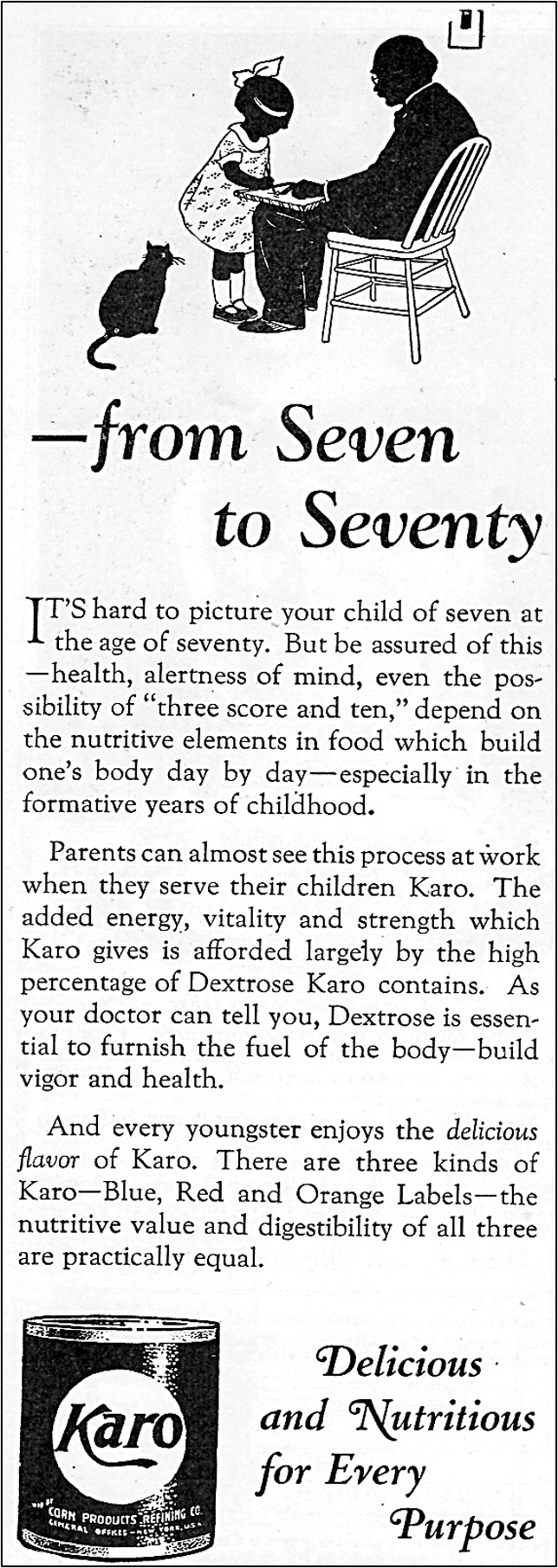
Whew! It’s fascinating that this 1925 Karo advertisement focuses on the supposed health benefits of the product.

Whew! It’s fascinating that this 1925 Karo advertisement focuses on the supposed health benefits of the product.

Here’s a hundred-year-old advertisement for Cox’s Gelatine (spelled with an “e” on the end, which makes it look European). Maybe every cook should keep some on hand (it sounds very useful), but unfortunately, I think that this brand is long gone.
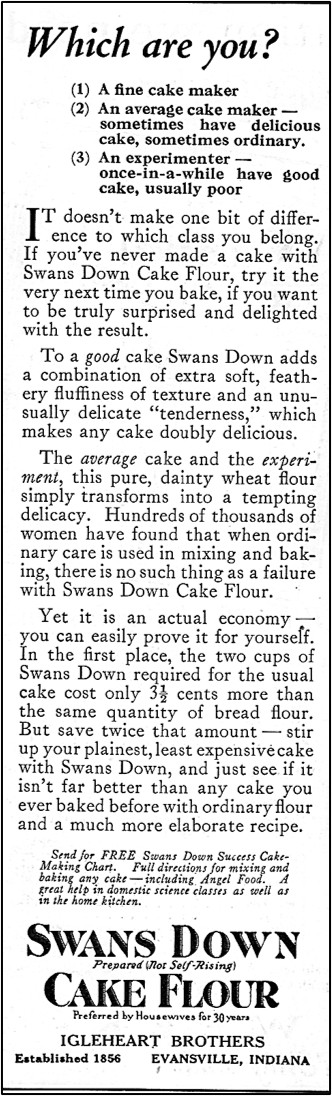
It’s always fun to find a hundred-year-old advertisement for a product that is still available. This is the first time I’ve see multiple choice options in a hundred-year-old advertisement. In some ways this format seems a little more modern than the format of many old advertisements.

I was flipping through a hundred-year-old issue of American Cookery magazine and near the back was a page showing free premiums that new subscribers to the magazine could select. I almost fell over when I saw a set of card suit sandwich cutters. I have a similar (but not identical) set that I use as cookie cutters.

My cookie cutters were once my mother’s, and she had them for as long as I can remember. The metal on my cutters is a little worn and some parts are shinier than other parts, but I really like them. They are a nice size and nicely cut the cookie dough. I’m now wondering if my cutters were originally intended to be sandwich cutters – though I tend to think that they probably are cookie cutters since they have metal on the top and it might be difficult to cut a thick sandwich with them.
I never really thought about it before, but assumed mine were mid-20th century cookie cutters. Now I am wondering if they are older than that and something that my mother originally got from her mother.
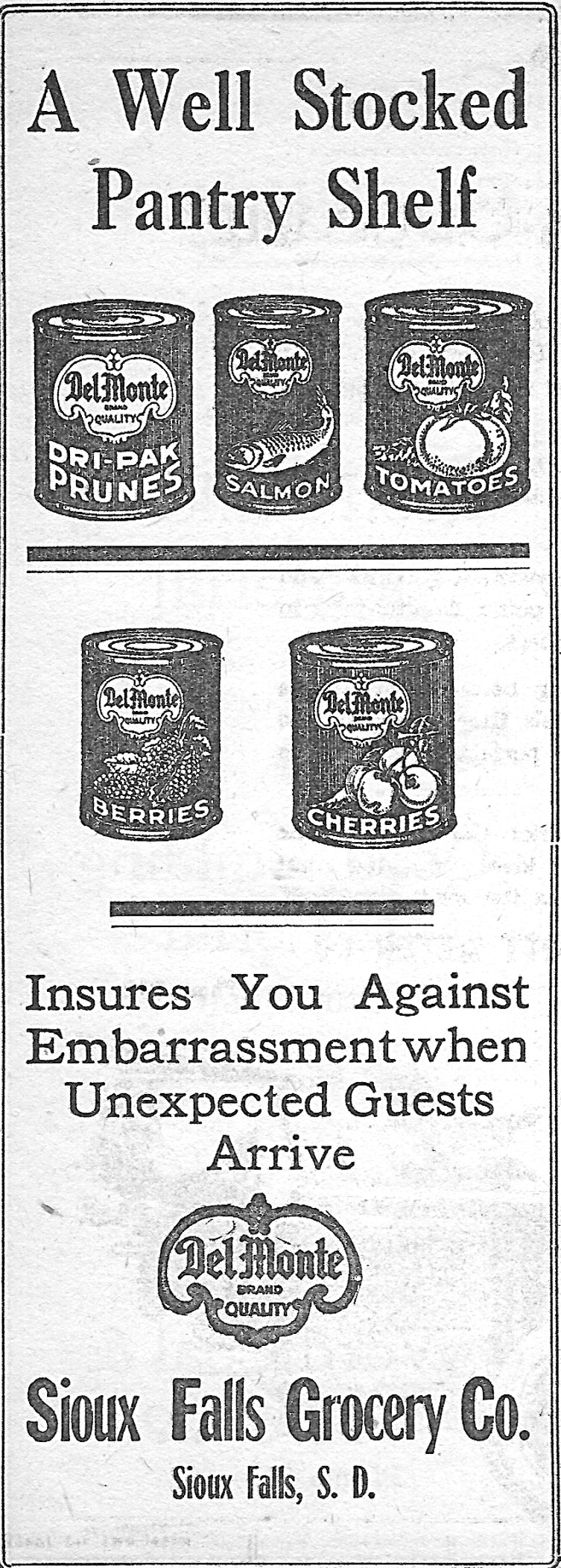
This hundred-year-old ad appeared in a cookbook that was a supplement to The Daily Argus-Leader (Sioux Falls, South Dakota) newspaper. This grocery store advertisement suggests how much has changed (and not changed) over the years. I seldom have unexpected guests who would expect to be fed; and, if I did, I probably won’t serve them canned goods.
I can still buy Del Monte canned goods – though Del Monte may no longer sell salmon or berries. I think that they still sell prunes, but they are no longer sold in a can.
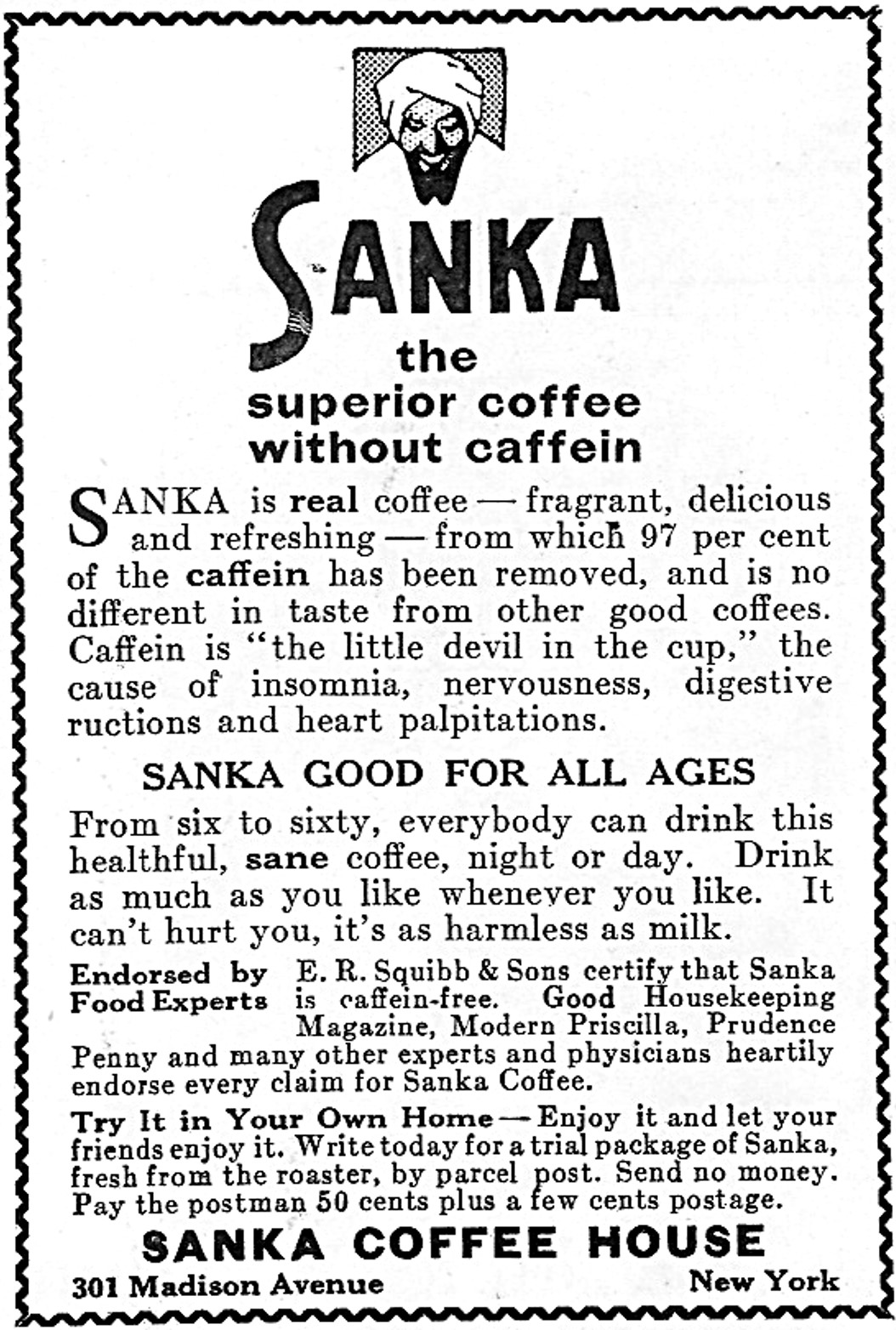
Sanka Coffee has been around for more than a hundred years. It is one of the oldest decaffeinated coffees. Sanka is considered a healthy alternative since it does not have caffeine. The advertisement recommends it for children as young as six, which seems extremely young to me. Should children really be drinking any kind of coffee?
It is also intriguing that the ad refers to caffein. Apparently that is an archaic spelling of caffeine.

Christmas has come and gone. As the holidays wind down, I’ve been reflecting on the various tasks required to prepare for Christmas, and the differences between 1924 and today. Some tasks that were necessary years ago may not be required today. A hundred years ago silverware needed to be polished in preparation for the big meal. Some hostesses used Magic Bright to remove tarnish. I shifted to using stainless steel years ago, and can’t remember the last time I polished silver.
I’m a little confused about exactly what Magic Bright was. It says that it was used to polish silver, but also notes that it cleans “without polish.” I think that Magic Bright was mixed with water and then flatware was dipped into it to remove tarnish rather than the more traditional way of rubbing polish on the flatware.
