1926 Tips for Figuring Out Whether Large or Small Oranges and Other Foods Are Cheaper
Source: Good Housekeeping (April, 1926)
Groceries are so expensive, and it’s often difficult to figure out which sizes and varieties of fruits and vegetables and other produce are least expensive. For example, if large oranges cost $1.75 per pound and a 3-pound bag of small oranges costs $5.99, I can easily figure out which has a lower cost for 3 pounds. But, it’s much harder to figure out which has more waste, and which ultimately is less expensive. Will there be more waste with small oranges than large ones? Which has a thicker skin? How will the serving size differ? Will I eat one orange at lunch regardless of its size, or might I eat two small ones (but only one large one)? If I want to juice the oranges, are the small ones or the large ones juicer?
People have grappled with these types of questions for at least a hundred years. Here’s what it said in a 1926 magazine article:
How much do you pay for the food you eat? Not for the food you buy, but for the food you actually eat. You are, of course aware that many foods as purchased, have more or less waste material that is discarded when food is prepared in the kitchen or when served at the table. In either case, this wasted material finds its way to the garbage can and contributes no food value to the daily meals. It follows, then, that the market price of any food having wasted material does not represent the actual cost of the food to us. . . .
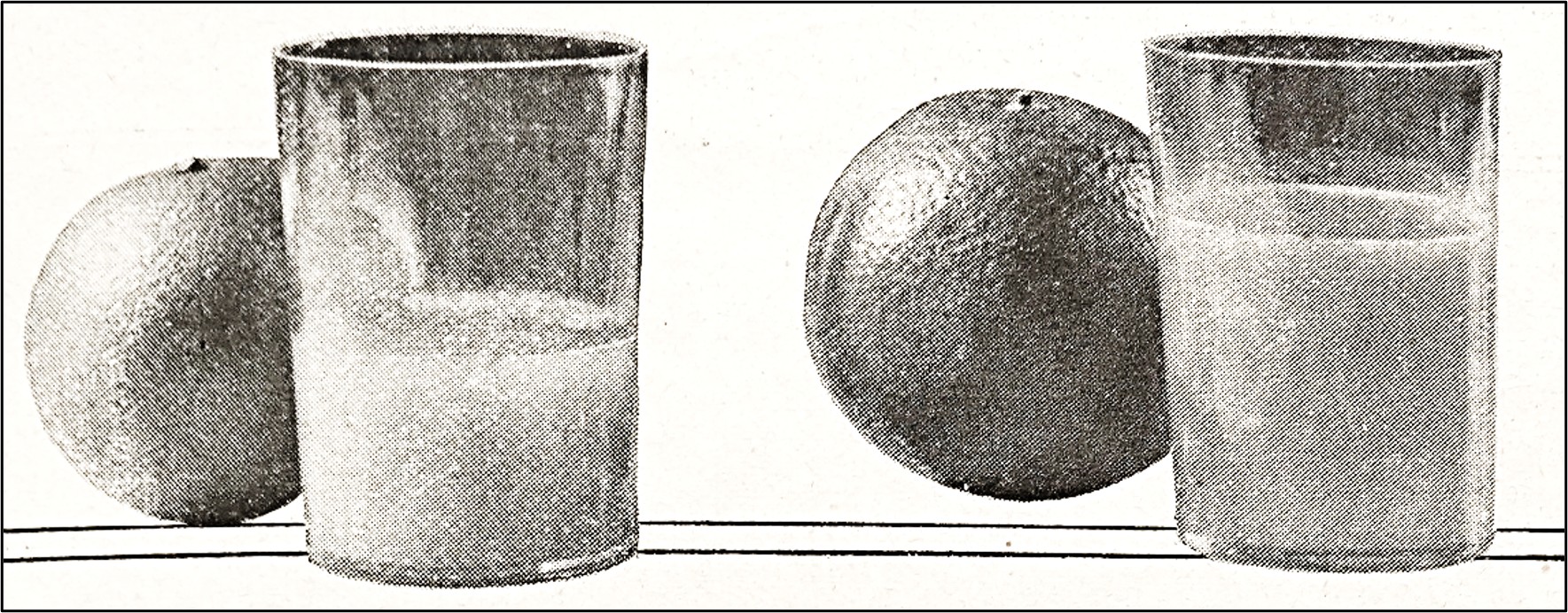
We find that the waste portion of any one fruit or vegetable may vary widely according to size and other factors. . . . [Large oranges] had a large percentage of juice, but the price was high for the quality of juice. We found this order to vary somewhat according to the price of the oranges in other stores. You may also find variation with the prices of oranges in your market. Therefore, if you buy oranges of different sizes and observe the quantity of juice from these various sizes, you may find a particular size most economical for you. . .
We found that small potatoes have a greater percentage of waste than large ones and take half as long again to pare. Cooking the small potatoes in the skin, of course, shortened their time in preparation. . . .
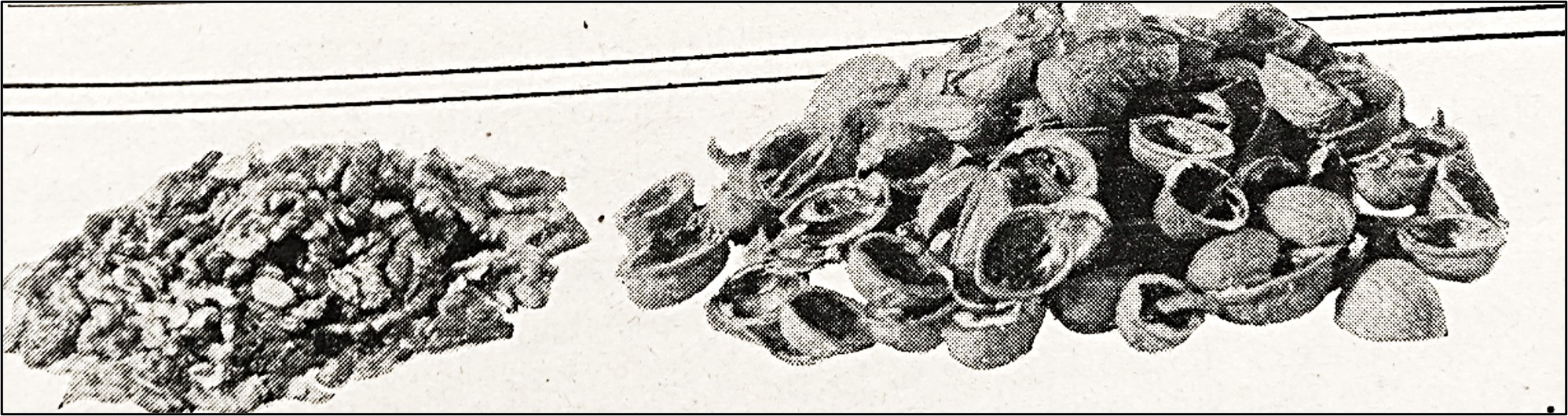
We found shelled walnuts actually cheaper than those bought in the shell, but in the case of all other nuts, the shelled were more expensive, not taking into account, of course the time it takes to shell the nuts.
19 thoughts on “1926 Tips for Figuring Out Whether Large or Small Oranges and Other Foods Are Cheaper”
It is interesting that people in general have comeback to this idea. For a long time, it seemed most people didn’t care about food waste since food was so cheap. With prices rising, they do care again. Food waste is a more prominent concern. My grandmothers and mother were careful not to waste food since they grew so much of it. They didn’t want to waste their hard work. They wanted to get the best value from their food purchases, since buying food was considered expensive. My sisters and I were taught this as well.
That makes a lot of sense. Back in 2019, I did a post comparing the percentage of income people spend on food in 1919 and 2019 that you might find interesting:
The Orange Question may be easier these days. I guess most of us just eat one orange at a time, regardles of size, but few of us juice them these days. So perhaps smaller wins? There again, they’re often harder to peel!
I’ve also noticed that larger oranges generally are easier to peel. Additionally, the orange varieties often differ across sizes. At the store where I shop, the large oranges that are sold individually are generally Navel oranges while the smaller ones are some other variety (maybe Valencia).
Oranges in the U.S. are only grown in the warmest states (Florida, California, and maybe a few other southern states), but are shipped across the country. In recent years, many of the U.S. orange groves have been decimated by Citrus Greening Disease, and more oranges are being imported. A lot are also imported during the off-season. Last summer I bought some oranges from South Africa, and was surprised that they came from so far away.
It all comes down to be aware of possibilities… It depends on where it comes from and time of year and how much you use! A 5 lb. bag of potatoes will not sour before I use them but a 10 lb bag with twice as much and half the price per pound as a single potato probably will before its all used up.
Agree – I have similar issues with onions. I generally buy a 3- or 5- pound bag of onions because they are much less expensive than the ones sold individually, but often some of them go bad before I use them.
I thought of the often misleading folk wisdom “buying the larger quantity product is cheaper”. I’ve found this often to not be the case in most regular grocery stores. This has led to us buying smaller cans of products we use often in order to be frugal since we live in poverty.
As another aside, I’ve found that some national stores have started marking items on sale for a price that is above the regular price. Wow.
I’ll be scouting oranges available nearby, to check it out. We like juicy oranges to eat. However, it has been so long since I made squeezed citrus juice to drink or make lemonade I’ve got the bug again. Hahaha
Please note that we are adults now, and no one can tell us not to play with our food.
Like you, I’ve recently noticed that sometimes the larger containers of various foods are more expensive per unit (ounce) than the smaller ones. I know that it is a marketing strategy, but it almost feels like they are trying to trick customers. That said, my mental math abilities are getting a workout when I go shopping as I try to figure out which size is the least expensive.
That’s a really interesting comparison. I wonder what would be the best way to approach figuring it out. It’s something about the ratio of bones to meat, but I don’t know where go from that general thought. I’ll probably end up mulling this over all day. 🙂
I also try shop carefully and not waste things – though I tend to consider myself thrifty rather an a miser. (Somehow the word miser always makes me think of A Christmas Carol.)


It is interesting that people in general have comeback to this idea. For a long time, it seemed most people didn’t care about food waste since food was so cheap. With prices rising, they do care again. Food waste is a more prominent concern. My grandmothers and mother were careful not to waste food since they grew so much of it. They didn’t want to waste their hard work. They wanted to get the best value from their food purchases, since buying food was considered expensive. My sisters and I were taught this as well.
That makes a lot of sense. Back in 2019, I did a post comparing the percentage of income people spend on food in 1919 and 2019 that you might find interesting:
Percentage of U.S. Household Expenditures Spent on Food, 1919 and 2019
That was interesting to see.
It makes a lot of sense (cents).
🙂 Nice play on words.
The Orange Question may be easier these days. I guess most of us just eat one orange at a time, regardles of size, but few of us juice them these days. So perhaps smaller wins? There again, they’re often harder to peel!
I’ve also noticed that larger oranges generally are easier to peel. Additionally, the orange varieties often differ across sizes. At the store where I shop, the large oranges that are sold individually are generally Navel oranges while the smaller ones are some other variety (maybe Valencia).
Same here. Yours are more locally sourced I guess. Ours generally come from Spain.
Oranges in the U.S. are only grown in the warmest states (Florida, California, and maybe a few other southern states), but are shipped across the country. In recent years, many of the U.S. orange groves have been decimated by Citrus Greening Disease, and more oranges are being imported. A lot are also imported during the off-season. Last summer I bought some oranges from South Africa, and was surprised that they came from so far away.
It all comes down to be aware of possibilities… It depends on where it comes from and time of year and how much you use! A 5 lb. bag of potatoes will not sour before I use them but a 10 lb bag with twice as much and half the price per pound as a single potato probably will before its all used up.
Agree – I have similar issues with onions. I generally buy a 3- or 5- pound bag of onions because they are much less expensive than the ones sold individually, but often some of them go bad before I use them.
Great post, love the comments also.
I thought of the often misleading folk wisdom “buying the larger quantity product is cheaper”. I’ve found this often to not be the case in most regular grocery stores. This has led to us buying smaller cans of products we use often in order to be frugal since we live in poverty.
As another aside, I’ve found that some national stores have started marking items on sale for a price that is above the regular price. Wow.
I’ll be scouting oranges available nearby, to check it out. We like juicy oranges to eat. However, it has been so long since I made squeezed citrus juice to drink or make lemonade I’ve got the bug again. Hahaha
Please note that we are adults now, and no one can tell us not to play with our food.
Like you, I’ve recently noticed that sometimes the larger containers of various foods are more expensive per unit (ounce) than the smaller ones. I know that it is a marketing strategy, but it almost feels like they are trying to trick customers. That said, my mental math abilities are getting a workout when I go shopping as I try to figure out which size is the least expensive.
Its kind of like is it a better buy to buy a turkey or a chicken when they are both the same price per pound
That’s a really interesting comparison. I wonder what would be the best way to approach figuring it out. It’s something about the ratio of bones to meat, but I don’t know where go from that general thought. I’ll probably end up mulling this over all day. 🙂
Thanks for the gentle reminder to shop smart and eat well!
It’s nice to hear that you found this post useful.
I was interested in the various comments about waste, since I’m a miser.
I also try shop carefully and not waste things – though I tend to consider myself thrifty rather an a miser. (Somehow the word miser always makes me think of A Christmas Carol.)