
16-year-old Helena Muffly wrote exactly 100 years ago today:
Friday, June 9, 1911: Must have forgotten what I did today. It won’t come into my head when I am ready to write it down.
Her middle-aged granddaughter’s comments 100 years later:
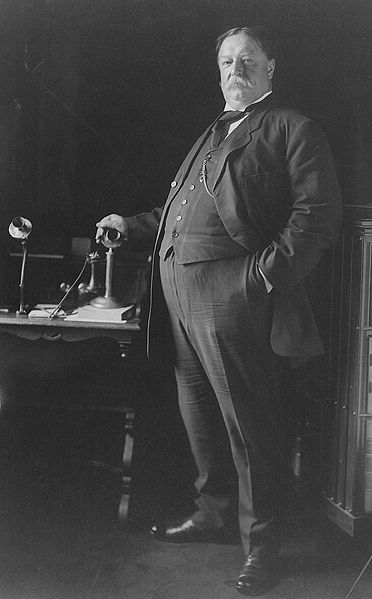
Since Grandma didn’t have much have much to say today, I’m going to go off on a tangent. When I look at photos from a hundred years ago some of the people look stout to me—well, frankly they look obese.
We hear that people are more likely to be obese today than in the past—and I wondered what people considered a healthy weight to be a hundred years ago.

I did a little research and found how one author defined obesity 100 years ago. According to Anna M. Galbraith, M.D. in a book published in 1911 called Personal Hygiene and Physical Training for Women:
Women should range in weight from one and eight-tenths to two and two-thirds pounds to each inch in height. In order to determine your own factor in this respect divide your weight in pounds by your height in inches. Any weight above two and one-half pounds to the inch in stature may be considered as excessive, inasmuch as it adds nothing to one’s mental or physical efficiency, and is frequently the forerunner to obesity.
According to the book, in 1911 the average woman was 5 feet 4 inches tall and weighed 133 pounds. According the Center for Disease Control and Prevention website the average woman today is still 5 feet 4 inches tall, but now weighs 165 pounds.
The chart above indicates when a woman was considered normal weight, overweight, and obese in 1911 and 2011. I was amazed to discover that according to the chart I’d be considered normal weight in 1911, but overweight today.
For 1911 I used the quote above to estimate the weights. I assumed that:
Normal weight = 1.8 pounds X height in inches to 2. 5 pounds X height in inches
Overweight = 2.5 pounds X height in inches to 2.67 pounds X height in inches
Obese = Over 2.67 pounds X height in inches
Today a person’s body mass index (BMI) indicates whether they are a healthy weight. BMI is calculated based upon a person’s height and weight and is calculated using a formula that is more complex than the ones used in 1911.
