
High School Graduation Rates, 1911 and 2010

15-year-old Helena Muffly wrote exactly 100 years ago today: 

Tuesday, February 28, 1911: I really cannot think of one thing that happened today of marked importance concerning my little world. One of the boys stopped school today. 

Her middle-aged granddaughter’s comments 100 years later: 

It’s amazing how much high school graduation rates have changed over the last one hundred years. In 1911 only about 20% of youth attended high school—and fewer than 10% graduated. Whereas, in 2010, about 90% of all students in Pennsylvania graduated from high school; and, the graduation rate for the Warrior Run School District (the district that now includes McEwensville) was 91%.

I wonder what the boy did after he dropped out of McEwensville High School. Even as a high school drop-out he had a higher educational level than most people in 1911.

Today the nation is focused on enacting policies that will ensure that all students graduate from high school “college and career ready”. Are schools better or worse now than a hundred years ago?

In Grandma’s day many people went on to lead successful lives with an 8th grade education. In my father’s day, a high school diploma was generally the minimal requirement for a good job. When I entered the job market, a bachelor’s degree was often a needed qualification. And, today it seems like many positions require at least a M.S.
No Show: Important School Visitor

15-year-old Helena Muffly wrote exactly 100 years ago today:

Friday, February 10, 1911: We were expecting an important visitor at school today, so some of us swept the school room and washed the black boards, but it was all in vain. He didn’t come. I don’t suppose the teacher cared. He wouldn’t have to do any sweeping this time.

Her middle-aged granddaughter’s comments 100 years later:

It is unclear from Grandma’s diary entry who the anticipated important visitor was. My guess is that it was the Northumberland Country Superintendent of Schools.

There was a movement to improve the quality of rural schools in the early 1900s. And many counties installed a county superintendent who was charged with monitoring, evaluating, and improving schools. The county superintendent—and in this era the superintendent would have always been a he—made regular rounds of the schools, and was given the role of inspecting schools and evaluating teachers.

Another possibility is that the anticipated important visitor might have been a school board member. Then, as now, elected boards governed the schools. Amazingly in 1911 there were more school board members in the United States than there were teachers. Across the country many rural schools employed only one or two teachers—yet the typical school board contained 4-6 members. For better or worse the level of community involvement in schools was truly amazing a hundred years ago. (As a strong proponent of parental involvement in schools, I tend to believe it was for the better).

Are Tests Too Hard?

15-year-old Helena wrote a hundred years ago today:

Thursday, February 9, 1911. I’m glad our examinations are over for this month, gee whiz, some of the marks I got weren’t very encouraging, but I suppose it’s my fault. If I were to be made over again I would like to be made a little bit smarter than I am at present.

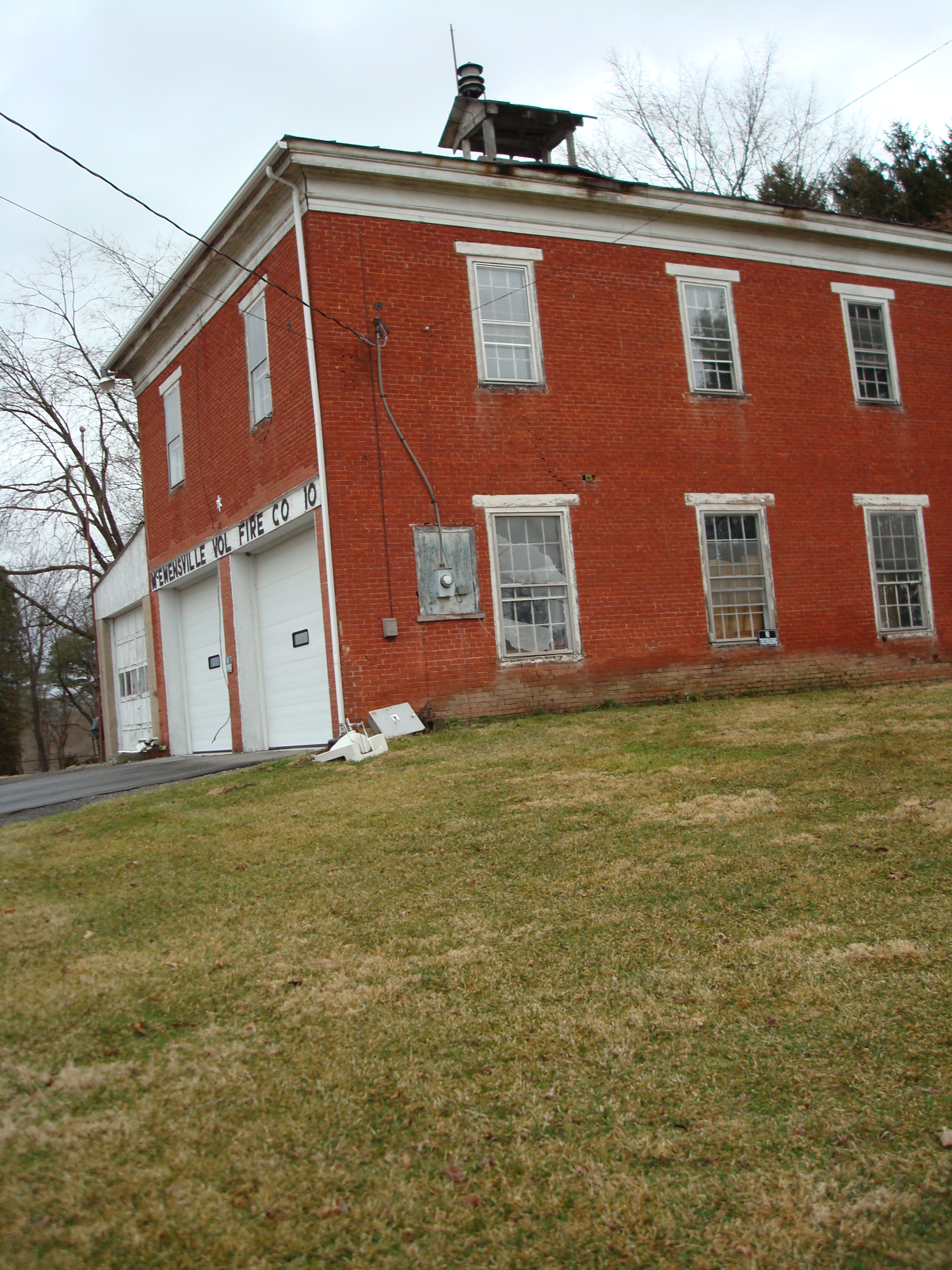
Recent photo of McEwensville High School

Her middle-aged granddaughter’s comments 100 years later:

Grandma probably got the grades she deserved–actually she probably did better than what was justified (see the diary entries on February 7th and  8th). I know that I’m overthinking this entry and that she should have just studied more–but I somehow want to try to put it into some sort of bigger context.

Grandma is frustrated over her grades—and she probably was not alone. The early 1900s was a period when the nation was grappling with issues such as –What do students need to know? How can students successfully show what they know? And, how should that learning be measured?

In 1911 many students dropped out of school—often because the curriculum seem irrelevant or because of poor grades. There was an ongoing debate about how to measure learning and how tough the grading system should be. I don’t have specific information about McEwensville High School but based on this diary I assume that exams were an important part of the grading system. But nearby schools faced political pressure to rely less on exams.  Jack Williams’ A Historical Study of Education in Milton, Pennsylvania provides hints about how parents and students felt about examinations.  In the early 1900s schools, “strived for a lessening of the importance of examination. . . for removing non-essentials from the curriculum, for a greater flexibility in the grading system and for economizing of time.” 

In Milton there a huge uproar over inflexible exams in the early 1900s and many of the quarterly examinations were eliminated. According to Williams in 1905 the Milton School Board instituted a reward system for good students. “Under this system, a pupil in the grammar or high school could be excused from these examinations provided they had attained a standing of 90 percent of their daily work and that their conduct had been satisfactory.”

Sometimes Cheats Aren’t Fooled

15-year-old Helena wrote a hundred years ago today:

Wednesday, February 8, 1911. Had some of our exams today. Came out all right in Latin. Our arithmetic wasn’t so easy though. My fingers feel rather tired. Had banana ice cream for supper. Yum, yum, yum.

Her middle-aged granddaughter’s comments 100 years later:

Be sure to see yesterday’s post if you missed it.  Otherwise, no comment . . .

“I might Be fooled as some cheats are”

15-year-old Helena wrote a hundred years ago today:

Tuesday, February 7, 1911. Some of the boys at school found the teacher’s Latin questions in examination, and we all expect to make a good mark. I do at least, but I might be fooled as some cheats are.

Her middle-aged granddaughter’s comments 100 years later:

Hmm—Today’s news media makes cheating sound like a new phenomena . . .

Odd, Unusual, and Strange Math Problems

15-year-old Helena wrote a hundred years ago today:

Tuesday, January 31, 1911.  If anything of real importance happened today I would write it down, but as nothing has it will not be here to read. This is the last day of the first month. What do you think of it? Vice versa.

Her middle-aged granddaughter’s comments 100 years later:

No mention of arithmetic problems in today’s diary entry. Maybe it went better today than yesterday.

I’m still fascinated by the problems in the 1911 high school arithmetic textbook that I found. The book contains some really strange problems–including some that deal with topics that probably would be considered unacceptable today.  

1. If 44 cannons, firing 30 rounds an hour for 3 hours a day consume 300 barrels of powder in 5 days, how long will 400 barrels last 66 cannons, firing 40 rounds an hour for 5 hours a day?

2. Bought by avoirdupois weight, 20 pounds of opium at 40 cents an ounce, and sold the same by Troy weight at 50 cents an ounce; did I gain or lose, and how much?

3. A wine merchant imported 1000 dekaliters of wine, at a cost of 75 cents a liter, delivered. At what price per gallon must he sell the same to clear $2000 on the shipment?

4. A certain number of men, twice as many women, and three times as many boys, earn $123.80 in 5 days; each man earned $1.20, each woman 66 1/3 cents, and each boy 53 1/3 cents per day. How many were there of each?

Kimball’s Commercial Arithmetic: Prepared for Use in Normal, Commercial and High Schools and the Higher Grades of the Common School (1911)

Remember that a hundred years ago patent medicines containing opium were legal, child labor laws were just being enacted, and it was way before woman had equal rights.

If you want to do the opium problem here are a couple of definitions:

Avoidupois weight (The usual system used in the U.S.):  16 ounces = 1 pound

Troy weight:  12 ounces = 1 pound

Arithmetic Problems in 1911 High School Text Book

15-year-old Helena wrote a hundred years ago today:

Monday, January 30, 1911. My! How the wind did blow today, smashed some panes in the school house windows with a deafening crash and alarmed us all, fortunately we escaped uninjured. Boo hoo I haven’t got all my arithmetic problems for tomorrow. Boo hoo. I’m getting stupid.

Her middle-aged granddaughter’s comments 100 years later:

It was either a damn strong wind–or the windows weren’t very strong. I wonder if the panes blew out when the class was working on the dreaded arithmetic.  To get a sense of what the problems were like I found a high school arithmetic book that was published in 1911. Here are the written exercises in the chapter titled The Equation:

1. To four times a certain number I add 16, and obtain as a result 188. What is the number?

2. A man having $100 spent a part of it; he afterwards received five times as much as he had spent, and then his money was double what it was at first. How much did he spend?

3. A farmer had two flocks of sheep, each containing the same number. He sold 21 sheep from one flock and 70 from the other, and then found that he had left in one flock twice as many as in the other. How many had he in each?

4. Divide 100 into two such parts that a fourth of one part diminished by a third of the other part may be equal to 11.

5. Find the area of a square field whose diagonal is 50 rods.

Kimball’s Commercial Arithmetic: Prepared for Use in Normal, Commercial and High Schools and the Higher Grades of the Common School (1911)