McEwensville Has Made the New York Times — Twice!

Saturday, January 7, 1911:  Missing entry: Diary resumes on January 12

Her middle-aged granddaughter’s comments 100 years later: 

Since there is again no diary entry today, I thought that it might be fun to see if McEwensville was ever mentioned in the New York Times. I searched the paper’s data base and found two news articles with a McEwensville connection.
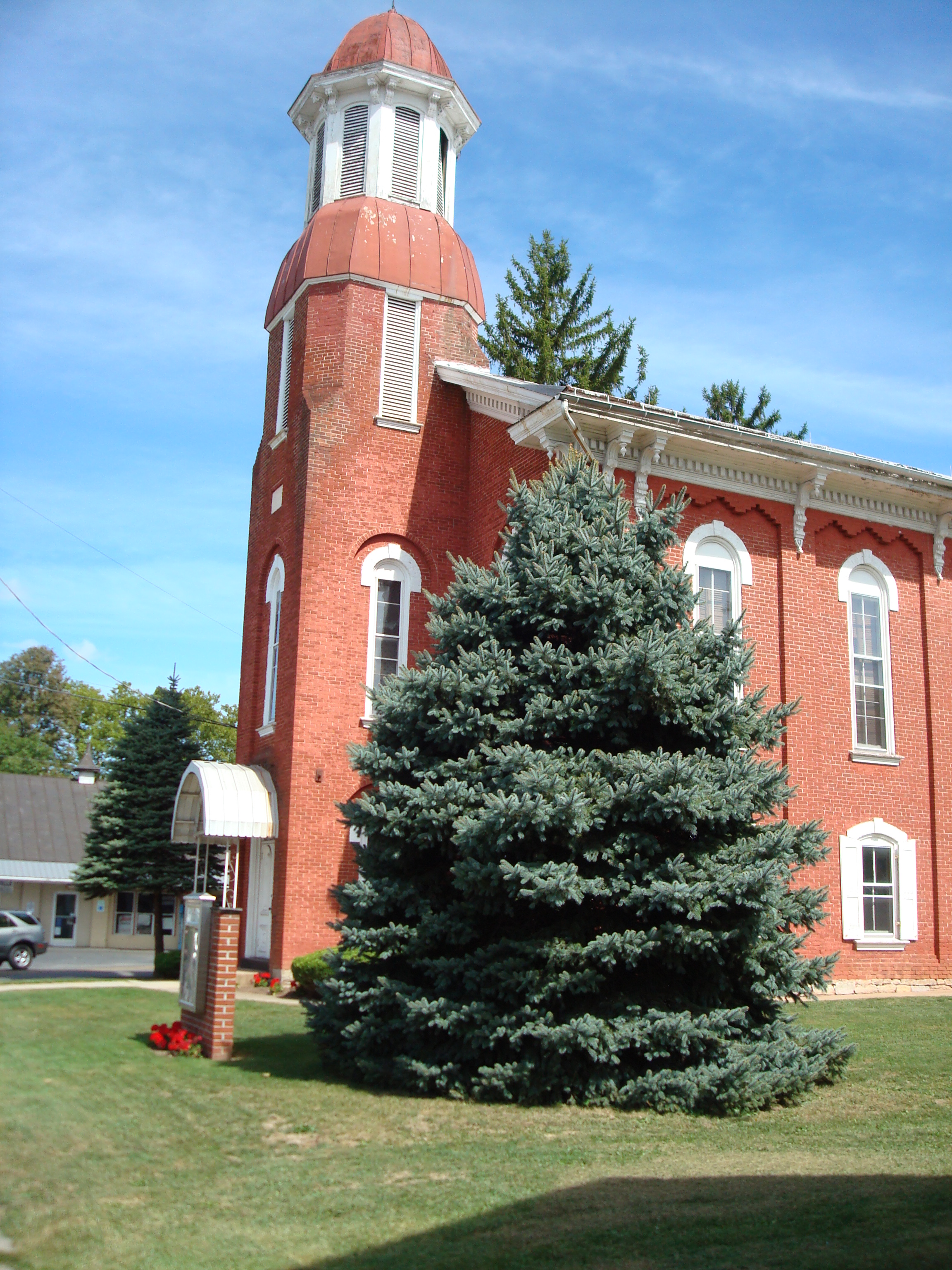
Recent photo of the McEwensville United Church of Christ (Reformed Church)

According to the September 11, 1885, New York Times:

A CLERGYMAN DROWNED

The Rev. J. K. Millett, of McEwensville, was drowned in the river at Watsontown yesterday. He was out in a boat with a young girl named Culp, and by some means the boat was upset. Miss Culp succeeded in saving her life by clinging to the boat, but Mr. Millet, although a good swimmer, went under. He was about 46 years old.

 McEwensville was again  mentioned in the New York Times on May 2, 1942:

 BURROWES, TRACK ACE, IS LOST TO PRINCETON

 Edward Burrowes Jr., 21, star Princeton University middle distance runner, was in a satisfactory condition at the university infirmary tonight after physicians found he had punctured a lung in a dressing room accident at Franklin Field, Philadelphia, last Saturday following the Penn Relays.  . . Burrowes entered the infirmary last night complaining of a slight pain in his chest. He said he had slipped on the wet floor of the Franklin Field dressing room and had fallen on a sharp-handled comb. Burrowes is a member of the junior class and lives in McEwensville, Pennsylvania. He holds the I.C. 4-A half-mile championship and university records in the 440-year and half-mile runs.

Grandma grew up on a farm outside of McEwensville. She kept her diary between 1911 and 1914—about midway between McEwensville’s two moments of fame in the New York Times.

McEwensville High School

Friday, January 6, 1911:  Missing entry: Diary resumes on January 12

Her middle-aged granddaughter’s comments 100 years later: 

Since there is no diary entry again today, I’ll tell you a little  about the high school that Grandma attended.

Grandma attended McEwensville High School.  The school building is next to the cemetery at the edge of McEwensville. She generally walked the mile and a half or so from her home to school.

Recent photo of the building that once housed McEwensville High School.

 The high school contained only one classroom and it was located on the second floor of the school building—the elementary class was on the first floor. It was a three-year classical high school where students learned Latin, poetry, literature, history, and arithmetic.

In 1911 Rachel Oakes—a friend of Grandma and her sister Ruth—was the elementary teacher.

After they graduated from McEwensville High School some students continued their education by taking a fourth year of high school at Milton or Watsontown. For example, my grandfather went to Milton High School after he graduated from McEwensville.

Milton had a more comprehensive curriculum than McEwensville—and included business courses and other classes that would more directly prepare students for a career.

The last high school class to graduate from McEwensville High School was in 1921. The high school closed because it had few students since most students in the area wanted to attend a comprehensive high school for all four years.  

Twenty or so years after my grandmother wrote her diary, my father attended the school. At that time it was an elementary school. One teacher taught grades 1-4 in the room on the first floor. Another teacher taught grades 4-8 in a classroom on the second floor. 

After the school completely closed in the late 1950s, the building was converted into a fire station. But the fire station is now gone, and in recent years the building has sat vacant and abandoned.

My friends have expressed surprise that my grandmother attended high school. In the early 1900s about half of the children in the United States ended their school careers with an 8th grade education or less.   

However, according to Benjamin Andrews in a 1911 book he wrote about girls’ education, there were more female high school graduates in the early 1900s than male because men could easily get jobs without a degree. A key role of high schools at that time was to prepare students to become teachers.

I don’t know why Grandma’s parents decided to send her to high school. I don’t think that she ever became a teacher.


Formerly Pine Grove

Thursday, January 5, 1911:  Missing entry: Diary resumes on January 12

Her middle-aged granddaughter’s comments 100 years later: 

Since there is no diary entry again today, I’ll tell you a little more about what I’ve learned about McEwensville.

There is a sign at the edge of town which says that McEwensville used to be called Pine Grove.  I can’t remember the town ever having another name, but I thought maybe it had a different name when Grandma was young. But according to George Wesner’s History of McEwensville the name change occurred much earlier.

The building that once housed Alex McEwen's tavern.

The town was originally called Pine Grove, but there was a problem because another town in Pennsylvania had the same name. So the residents decided that the town needed a name change.

A War of 1812 veteran named Alex McEwen owned a tavern in the hamlet. One evening a number of guests were at the tavern. Alex was a fantastic host and the probably well-lubricated guests were having a wonderful time. The town name issue popped up. It was suggested that the town should be named after Alex—and it has been McEwensville ever since.

McEwensville in 1911

Wedsnesday, January 4, 1911:  Missing entry: Diary resumes on January 12

 Her middle-aged granddaughter’s comments 100 years later: 

As I’ve prepared to post this diary I’ve discovered a lot of background information about McEwensville–the nearby town where Grandma attended high school. I’ll be posting some of what I’ve learned about McEwesnville’s history over the next several days. 

Today McEwensville is a sedate town where, according to a resident, “It’s a wonderful place to live, but nothing ever happens.”

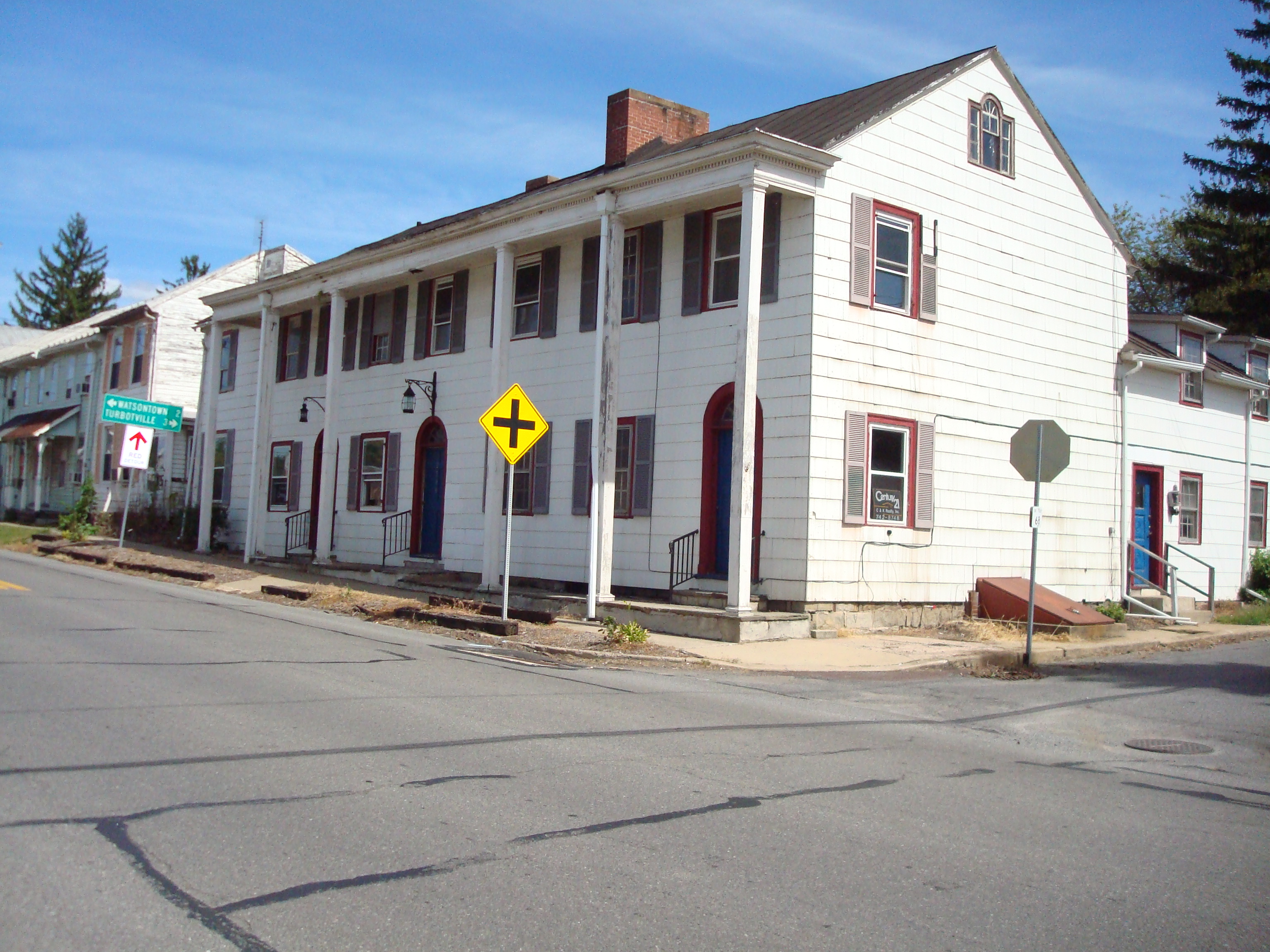
The building in the foreground was a combination restaurant and boarding house in 1911. The building further down the street used to be Armstrong's Store.

I love to visit McEwensville and find it relaxing to dig into the local history books at the Montgomery House Library while quilters –or other meeting attendees–are busily at work in the library’s community room.   

According to the 2000 census McEwensville has a population of 314. A hundred years ago McEwensville had several stores, a pharmacy, a carriage factory, three churches, and a school. Today it has a diner, a chain saw repair shop, a bicycle shop, a beauty shop, and a church.

In 1911 Armstong’s General Store on Main Street was the center of activity. There was a combination restaurant and boarding house at the corner of Main Street and Watsontown Road. A transportation service using horse-drawn vehicles took residents from McEwensville to their jobs in Watsontown and Milton.

When Grandma was young there were large oil lamps on street posts in McEwensville that were lit each evening. The lamplighter got the job through a sealed bidding process, and the low bidder usually got the position. According George Wesner in his 1976 history of McEwensville, “Johny Phillips was one who filled this position for many years. He was short of stature and used a short ladder while performing his duties as a lamplighter.”

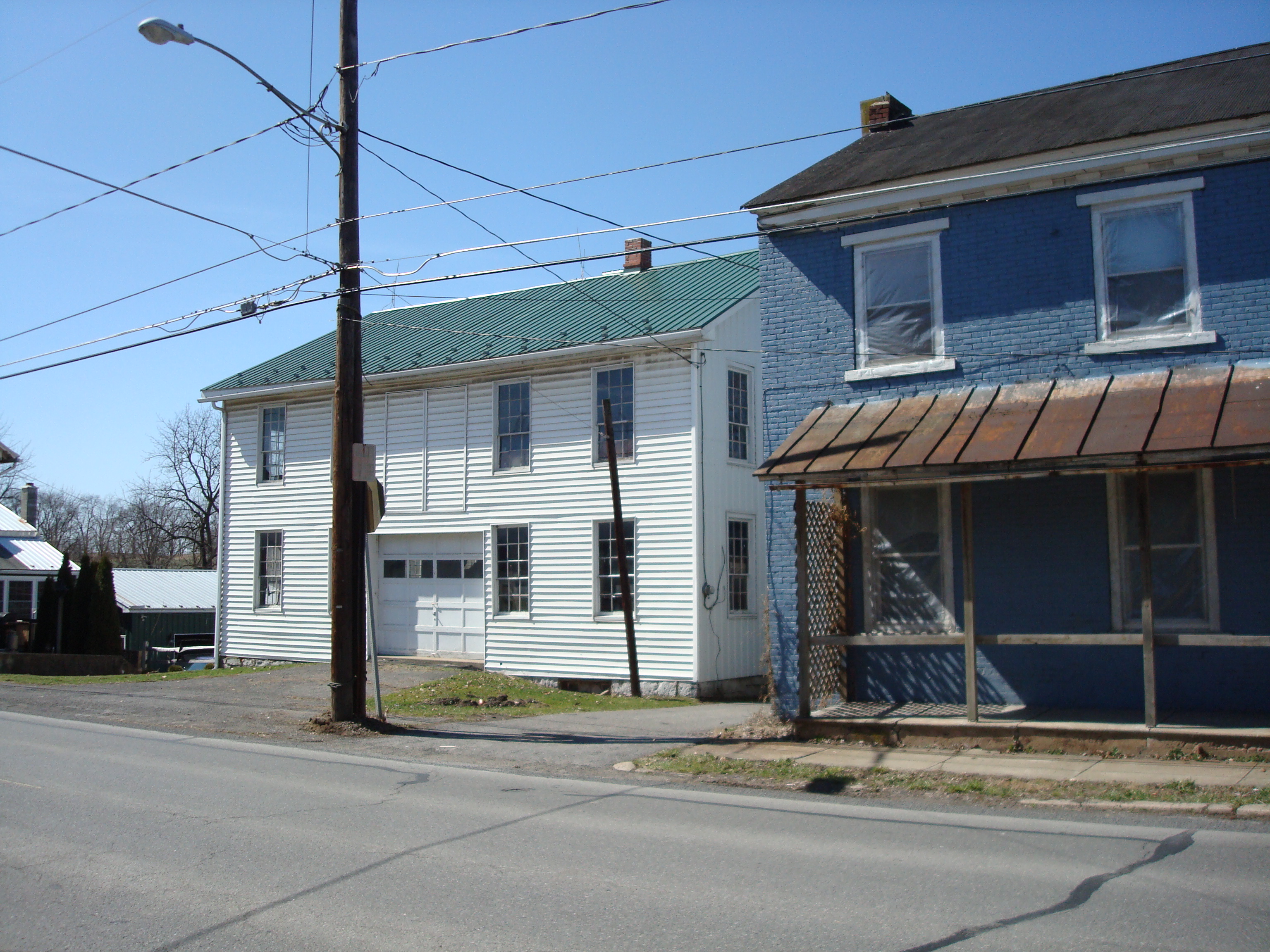
The white building was once Mauser's Carriage Shop.

In 1911 Mauser’s Carriage Shop was at the corner of Maple St. and Main Street. The company made horse-drawn carriages and employed about 12 people.

Advertisement in the January 4, 1911 issue of the Milton Evening Standard

At the corner of Main Street and Potash Road there was a blacksmith and horse shoeing shop. Somewhere along Main Street there was a foundry that manufactured  farm implements (including plows), water troughs, butcher stoves and other cast iron items.  

 Most food was locally produced in Grandma’s day. According to Wesner, “In the early days many families kept a cow to provide milk and butter for themselves and at times extra for neighbors.”

Grandma probably walked past Gold’s  Butcher Shop on her way to school each day.  Wesner wrote,  “Gold’s Butcher Shop was located along the south side of the old Watsontown road, the last building in the borough . . . Gold’s sausage was a favorite of the community. As there was no refrigeration at that time, it was a cold weather project.”